By Julie Krawczyk
If you receive an unexpected message from a stranger offering investment advice, delete it immediately.
If you respond, you could be the next target of a “pig butchering” scam — one of the most psychologically manipulative and financially devastating frauds plaguing Americans today.
The FBI’s Internet Crime Complaint Center reported $5.8 billion in losses from cryptocurrency investment scams in 2024 alone, with victims over 60 suffering the most significant financial impact.
The “fattening”
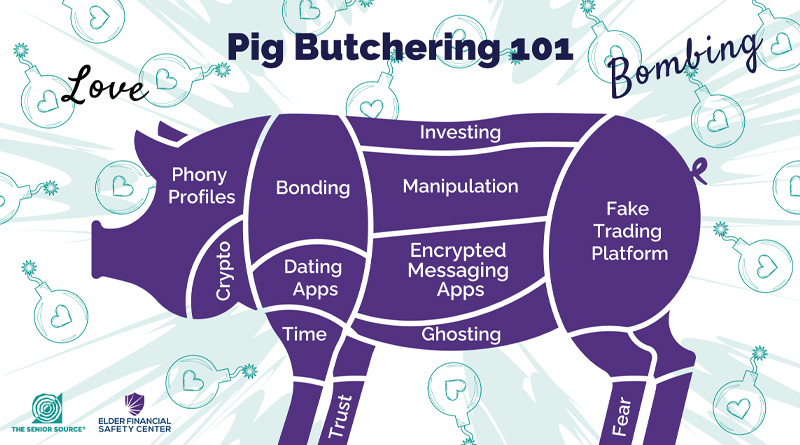
Pig butchering scams earn the name from the agricultural practice of fattening livestock before slaughter. In this investment scam, criminals are willing to spend weeks, even months, building trust with victims, “fattening” them with fake profits and emotional connections before extracting every dollar possible. Unlike quick-hit frauds, these scammers play the long game, cultivating relationships that make their victims believe they’ve found financial opportunity, romance, or both.
Neighborhood Spotlight
Park Cities
Where the Park Cities Stay Connected.
Cryptocurrency fraud
The goal is always the same: convince victims to deposit their money into fake cryptocurrency investment platforms. Think of it like skimming devices at gas stations — the interface looks legitimate, but behind the scenes, criminals control everything. Victims see impressive “returns” on dashboards that appear to be credible, but these numbers are fabricated. Every dollar deposited goes straight into the scammers’ pockets, never entering any legitimate investment vehicle.
An unexpected message
These scams typically begin with unsolicited contact through social media, a text message from an unknown sender, or through a dating app. While romance can be part of the deception, not every pig butchering scam involves a romantic angle. Some scammers pose as old friends, successful entrepreneurs, or knowledgeable investors who just want to share their “secret” to wealth. They gradually move the conversation to an encrypted platform like WhatsApp or Telegram, making it more difficult to track their activities.
The trap closes
Eventually, the victim tries to make a withdrawal. Suddenly, the platform requires “taxes,” “fees,” or “account upgrades” before releasing funds. Each payment leads to another excuse and another fee. Withdrawals become impossible, and by this point, victims have often liquidated retirement accounts, borrowed from family, or sold assets to continue investing.
Victims on both sides
Perhaps the most disturbing aspect of these crimes is that pig butchering operations are often linked to organized crime and overseas human trafficking networks. Many scammers are themselves trafficking victims, forced to execute these schemes in compounds abroad. This adds another layer of tragedy to an already devastating crime.
Julie M. Krawczyk, the director of the Elder Financial Safety Center at The Senior Source, serves on the state’s Family and Protective Services Council and as vice-president of the Texas Partners of Adult Protective Services state board. If you have questions about financial scams or need expert, professional, and unbiased financial guidance, contact the center at [email protected] or 214-823-5700. Learn more at theseniorsource.org.