By Don Dafoe
I am originally from Wisconsin, the land of the Green Bay Packers, cheese, the muskellunge and cow tipping. The license plate says: “America’s Dairyland.”
Loyalty to my native state is why I’m upset about the decline in milk consumption.
According to the U.S. Department of Agriculture, the daily per capita consumption of milk has decreased for seven decades.
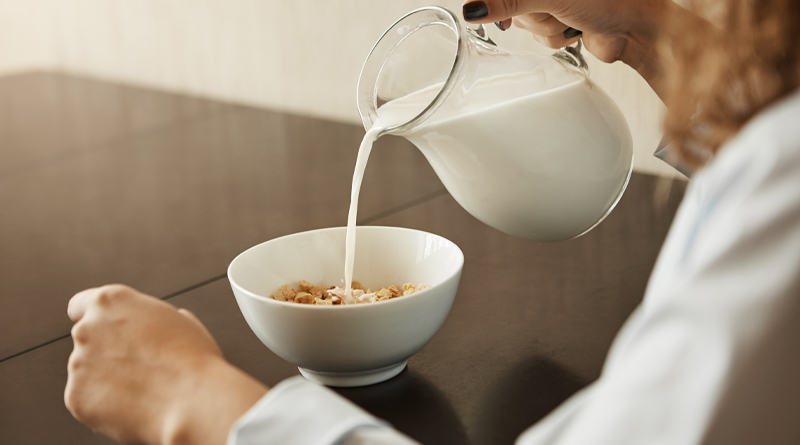
In 2019, it was down to about a half a cup — hardly enough to float Fruit Loops in a bowl.
This decrease is due to competition from sugar-sweetened soft drinks, juices, sports drinks, and branded water. For example, Volvic water from France is “volcanic natural mineral water (that) originates from the depths of those protected volcanoes, in an impluvium with unique biodiversity, where it gets filtered for five years.” Compare that advertising copy to “milk from a heifer in Weyauwega, Wisconsin.”
Neighborhood Spotlight
Park Cities
Where the Park Cities Stay Connected.
Milk is the perfect food. As babies — although we weren’t consulted — we relied on milk to grow and develop. In case you didn’t know, milk is rich in protein, calcium and Vitamin D. The source is natural and derives from (mostly) contended cows.
Yet, we have turned to oat milk and almond milk. What’s next? Asparagus milk?
How do they make almond milk anyway? Aren’t almonds dry, smoked, and salted? (It takes 1 gallon of water to create a single almond. To make almond milk, soak almonds in water.)
At what point will the American Diary Association rise up and object to appropriation of the label “milk?”
The dictionary definition of milk is “white fluid produced by mammary glands.” This blunt definition does not do justice to milk, and it certainly does not apply to oat “milk.” The nerve of some people.
Texas ranks fourth nationally in milk production. Wisconsin is second after California. Drat! However, if you calculate the ratio of cows to humans, Wisconsin beats the Golden State — 1:5 vs 1:25. The comparable Texas statistic is 1:50.
A dairy cow produces 6-7 gallons of milk daily so every Texan can glug down 2 cups of milk from in-state cows every day.
Way back in 1862, Louis Pasteur described the eponymous process of heating up milk thereby killing harmful bacteria (e.g., diphtheria, typhoid) and prolonging shelf life.
Some people, including some in high places, are encouraging the consumption of raw milk. To be consistent, let’s not wash lettuce and eat raw meat too.
If we embrace potential infection with mycobacterium tuberculosis, why not escherichia coli and tapeworms? I milked a cow once — then immediately washed my hands.
So, gentle reader, got milk? Get milk.
Have a nice, tall, cool glass of pasteurized milk today. Pair it with a slice of apple pie with, as we do in Wisconsin, a slice of cheese on top. And where does cheese come from? Milk.
Dr. Don Dafoe, a transplant surgeon who lives in Highland Park, isn’t shy about cheesy phrases and nutty columns.