Caregiving for an aged loved one can be a tough obstacle course, especially when dementia enters the picture.
While serving as sole caregiver for my mother for over three years, I learned many tough lessons about patience, keeping your eyes open for changes, and not being afraid to ask for help, though this last one was late in coming.

One hot day in early September 2023, I took my famously stubborn mother for what would be one of her last hair appointments at the salon in Highland Park Village.
Noticing she had once again forgotten her phone, I gave her mine when we arrived, not wanting her to be without one. Scanning for a parking space and finding none, I dropped her off, as I often did, reminding her to call me at her number when she was done, or to tell the salon to do the same. She dutifully nodded as she exited the car.
After waiting an hour and a half by the phone at home, I dialed the salon to check up on her.
Neighborhood Spotlight
Park Cities
Where the Park Cities Stay Connected.
“Mrs. Hickman? Oh, she left,” the concierge said.
“She left?” I gasped. “She wasn’t supposed to do that. When did she leave?”
“About 20 minutes ago.”
I hadn’t informed them of her recent dementia diagnosis, though, looking back, I obviously should have.
A panicked search ensued. Within a few minutes, I luckily came upon an HP police officer, and he received a call about an “elderly woman” as we were discussing the situation. I followed him to the scene, and an ambulance pulled up as we arrived.
Obviously exhausted, my mother sat in the grass at a residential intersection as a middle-aged woman bent over, talking to her. Relieved but exasperated, I was surprised she had made it about two-thirds of the way home in the heat.
“What were you thinking?” I implored as I approached her. “Are you OK?”
“I thought I would just walk home,” she said innocently.
She nodded and smiled as the police and paramedics questioned her. I recognized the middle-aged woman, who turned out to be not only a neighbor in our building but also a nurse. She looked at my mother sitting in the grass, then shot me a hard, judgmental stare.
“She was supposed to call me when she was done!” I desperately explained to everybody.
The scene soon calmed down, and my mother predictably refused any treatment or a ride to a hospital. They gave her a bottle of water. I offered my thank-yous and apologies, helped her into our car, and we drove the few blocks home.
I started to calmly lecture her but stopped myself short, realizing we were far beyond such a gesture being helpful at that point. She had clearly slipped another rung down the ladder, and I hadn’t realized it. I thought I had been careful enough, but I hadn’t. Another frightening lesson learned.
But after a couple of subsequent appointments, my mother’s salon visits faded away like everything else. With dementia, priorities often change. Some things are not worth the risk anymore, and others simply lose their importance.
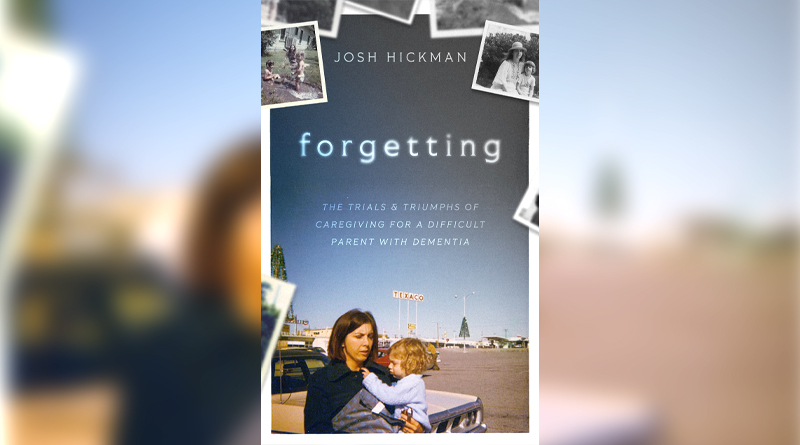
Josh Hickman adapted this column from his newest book, “Forgetting: The Trials and Triumphs of Caregiving for a Difficult Parent with Dementia,” which comes out Oct. 1. Dr. Drew Pinsky, host of “Ask Dr. Drew and Health Uncensored,” describes it as “a heart-wrenching and honest account” that “reminds us of the unexpected battles in life that are still worth fighting.”
Author

Josh Hickman
Josh Hickman is a national award-winning journalist, visual artist, sometime musician, and author of seven books. His writing For People Newspapers often focuses on arts & culture, local small businesses, local history & government, and interesting personal stories. His paintings include a commission for Dallas County and a donation to Parkland Memorial Hospital.