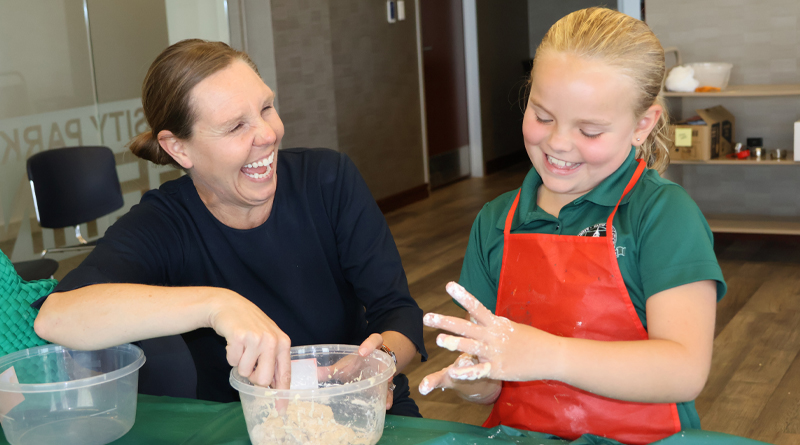
It squished like slime, smelled like apple pie, and tempted more than a few taste buds.
On Sept. 24, the kids at the University Park Public Library weren’t reading about science — they plunged in hands first with a fall-inspired apple oobleck experiment.
“I tried eating it — it didn’t taste good,” said 9-year-old Zoey Seagroves. “It’s technically edible because you’re using cooking ingredients: cornstarch and water, applesauce and cinnamon.”
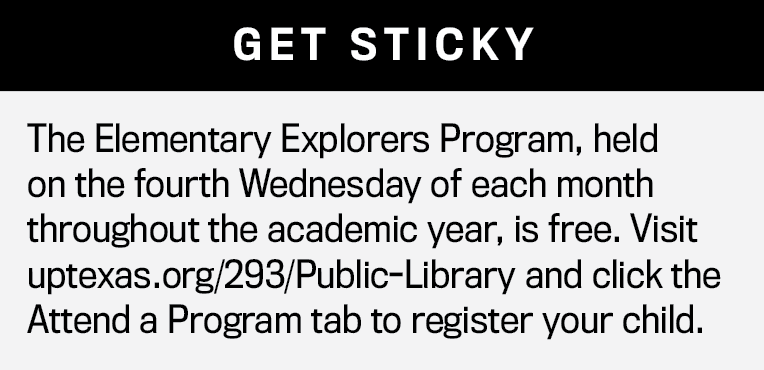
Parents said the messy fun was accompanied by serious benefits. They praised the library’s hands-on STEM program, Elementary Explorers, for providing kids with new experiences, the chance to make new friends, and an opportunity to learn outside of the conventional classroom setting.
“I think it’s so helpful, because she can test different things, different experiences, different from our home. So she loves it. We come here every day,” said Isabela Guimaraes, mother of 6-year-old Sofia.
Neighborhood Spotlight
Park Cities
Where the Park Cities Stay Connected.
Zoey’s grandmother, Lumi Seagroves, attested to the added social benefit of the program.
“First of all, it’s free, so that’s pretty fantastic,” she said. “But it just gives her a fun outlet, and she always brings a friend with her, so it just gives a fun little play date. That isn’t part of the norm, you know? And it’s just easy to do. It’s in the neighborhood, and we love it.”
Founded in 2019, the Elementary Explorers program uses fun hands-on activities to introduce STEM concepts to young children through experimentation and building. From learning about the basics of electricity to concepts as complex as non-Newtonian fluids, the children of Dallas are turning mere curiosity into discovery.
The program sprang from the creative mind of youth services librarian Zoe Williams, who wanted to balance the library’s monthly art program with something science-driven.
Williams designs the lessons herself, carefully considering the skills she wants children to learn, the necessary supplies, and most importantly, the joy kids will take away.
“I look for projects or activities that I think the kids would enjoy, and it’s been fun figuring out what sparks their interests,” she said as she reflected on her process for building the curriculum. “I’ve noticed a lot of them really enjoy electricity and circuits. So, we’ve done quite a few circuits for circuitry programs; that light-up aspect of the project is so fascinating.”
Parents say that the program’s effects ripple out even beyond the experiments.
“It’s an added excuse to come to the library, which has so many (benefits.) It’s a chance to learn, to meet new people, try new things, all of this together, and it’s in the middle of our community,” said Samantha Heidbrink, mother of 9-year-old Hazel. “We always stop in and get books or computers, and it leads to many different things along the way.”
For the kids, it’s an afternoon of discovery and fun. For parents and grandparents, it’s a reminder that sometimes the best learning happens just down the street.