Highland Park MAPS students beat out teams in the U.S. and Canada
The task would have been tricky for seasoned urban planners, let alone high school students.
Teams in the 2025 Urban Land Institute UrbanPlan Americas Student Competition needed to redevelop an old, run-down portion of the fictional city of Yorktown as an ecodistrict.
Along the way, they had to balance financial constraints, city goals, and demands from neighborhood interest groups for everything from a locally-sourced supermarket and art space to a drug treatment center and skate park.
Once they’d done that, the students had just two hours to respond to another twist from Yorktown’s “city council” of Urban Land Institute volunteers. They had to make their ecodistrict a place that would incentivize new, innovative companies to set up shop.
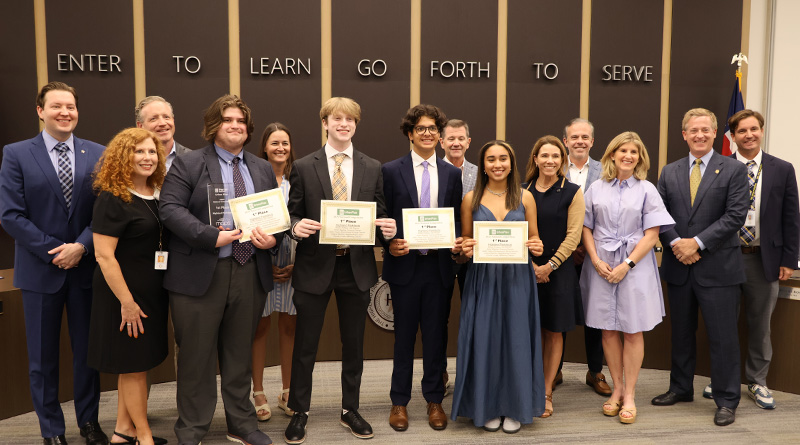
The five members of the Highland Parkitects didn’t simply accomplish all that — they did a better job than any other team of high schoolers in the United States and Canada.
Neighborhood Spotlight
Park Cities
Where the Park Cities Stay Connected.
Avner Magilow, Camden Coale, Jaden Taylor, Rohan Portteus, and Juliana Maambo — who were all students in the MAPS environmental architecture course — brought home a win in the Urban Land Institute contest in May. It was Highland Park’s first time competing at the national level.
The students attributed their successful plan, which included a completely walkable space and innovations such as electric streetcars and solar farms, to a team effort that drew on each of their strengths.
Magilow was so familiar with the project’s financials that he could answer immediately if asked how much a high-rise would cost. Portteus understood how to design the district. Maambo knew how to bring the neighborhood groups together. Taylor was the environmental and equity director. And Coale, a champion debater, was able to convey the group’s plans.
The students also had the advantage of a class not typically offered in high school — the MAPS environmental architecture course, which taught them to create architectural designs that integrate environmental principles.
During the six weeks students spent preparing their initial proposal, they drew on advice from Urban Land Institute volunteers, including Phillip Bankhead, the father of two HP graduates who originally suggested participating in the program to MAPS. The team also found inspiration in successful preservation efforts in Dallas.
But the Parkitects faced surprises in the competition’s finals, which were held via Zoom on May 31. Due to a delay in the contest’s start, teacher Yvette Hightower and two team members had to leave for flights. The computer Highland Park had planned to use for its presentation left with one of the students.
The three remaining Parkitects switched their slides to another computer, which crashed several times before they succeeded in presenting.
Team members thought they’d done well — all things considered — but weren’t optimistic about winning. They were also very hot. The air conditioning wasn’t working in the high school, and the team members were wearing suits.
When the Urban Land Institute announced their win about 30 minutes later, the students were so surprised that Magilow yelled “No!” before the team thanked the judges and started celebrating.
The students said they learned the value of collaboration through their efforts. They didn’t always agree, but their discussions led to better outcomes.
“We all had our own little niche. But then we all came together,” Portteus said. “We took our different perspectives, and our different knowledge from our different focus areas, and combined them. And that made us really powerful.”
The project, Hightower said, wasn’t just urban planning. It was real life.
“This is what cities do,” she said. “It’s such a deep project. And I couldn’t do it without (the Urban Land Institute’s) support.”