By Julie Yarbrough
The only absolute about grief is this: We grieve as long as we grieve.
Across Texas, few other events have affected us like the tragic July 4 flooding that engulfed areas of Camp Mystic situated along the Guadalupe River.
The waters swept away an entire cabin of 8-and 9-year-old little girls, 27, an inconceivable number of children in the prime of their innocence.
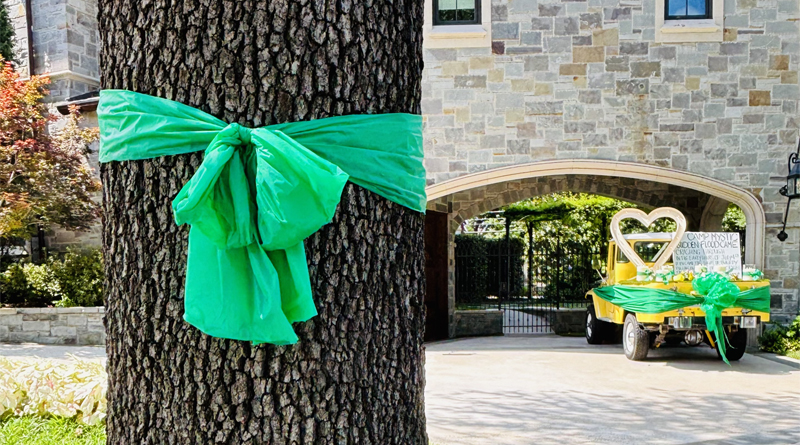
As those who survive, we search for meaningful ways to remember those who died. We find comfort in the solidarity of shared community expressions of grief, often symbolized by ribbons tied around trees, mailboxes, lamp posts, and front doors as an affirmation of hope.
Ribbons convey the message that we will never forget.
Neighborhood Spotlight
Park Cities
Where the Park Cities Stay Connected.
Those who grieve the death of a beloved child or an adult who died attempting to save the lives of those children will grieve forever. Their homes are missing someone vital to the life and energy of their family. There is a void that can never be filled.
Those who are less directly affected grieve in the moment, for a little while, and gradually return to the mainstream of life. This is the normal progression of indirect grief.
To those who will grieve forever, it often feels as though others have forgotten. They long for nothing more than to hear the name of their child spoken aloud and her love for the world remembered.
As the holiday season nears, decorations encroach on the meaning and significance of remembrance ribbons and diminish their visibility. Many ribbons look sad and wilted; others look faded and frayed.
It is often a turning point when we know that we will never forget the loved one and find the courage and strength to rearrange and reorder reminders that make us sad.
Many of those directly affected are not yet ready to take down sad ribbons. Others may feel somehow disloyal if they do. Still others may feel guilty if they remove a ribbon to make room for decorations that express the joy of the holiday season.
The either/or implied by grief is, at best, confusing. We arrive at a crossroads when we realize that our choices in grief are not either/or, but both/and, in the certainty that we will never forget the one who died.
Grief lasts as long as it lasts.
No one should feel pressured to take down ribbons, and no one needs permission to do so.
At this pre-holiday moment, perhaps what is lacking is a thoughtful suggestion for a special way to repurpose sad ribbons.
What if those in the community collected every green, pink, and purple ribbon and tied each one to the end of a balloon, creating a bunch the size of a cloud?
What if there were a community event in a nearby park for the sole purpose of releasing the balloons, including a moment of silence and prayer, before every eye in the community watched as the balloons ascended joyfully toward heaven?
Imagine the giggles of each small girl as they watched a cloud of love cross the divide between heaven and earth, and sad ribbons find their highest and best use as a source of comfort that urges the human heart to live forward in love.
Julie Yarbrough grew up in Highland Park and lives in Dallas. She has written 10 books on grief and blogs at beyondthebrokenheart.com.