When I was touring potential colleges many moons ago, one of my deciding factors had nothing to do with labs or libraries — it was whether any English classes were held outside. Something about learning in the open air, under trees rather than fluorescent lights, always felt right to me.
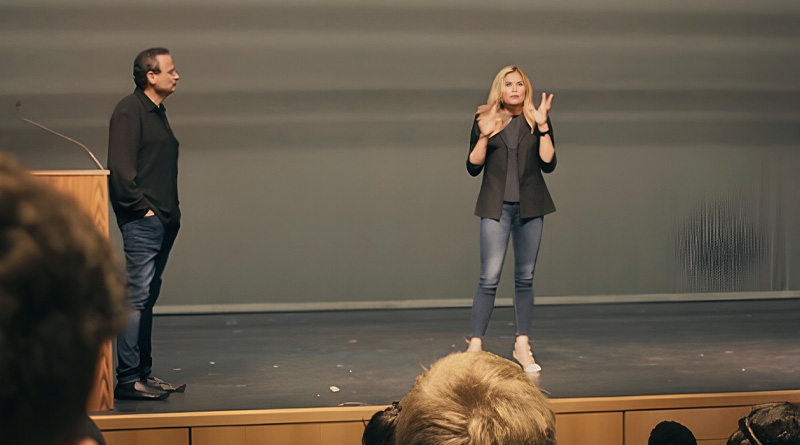
Years later, when my sons were in high school, my husband and I invited our friend Mariel Hemingway to speak to their English class. After she finished her presentation in the school’s theater, she asked everyone to head outdoors, slip off their shoes, and feel the earth beneath their feet.
“Let’s do a little grounding,” she said. The students were thrilled to continue the Q&A in the sunshine. Mariel, who says her creativity peaks when she’s in the mountains, recounted how her grandfather spent many of his days outdoors in Cuba, where he was either on the ocean fishing or playing baseball with Cuban children who often called him “Papa.”
There’s something freeing and transformative about outdoor learning that connects body, mind, and environment. That spirit is alive and well in today’s STEM — and increasingly, STEAM — programs.
As I gathered curriculum updates from area schools for this month’s STEAM issue, I was struck by the initiatives students can explore beyond four walls.
At Greenhill, students are not only cultivating a butterfly garden but also restoring native prairie grasses, understanding firsthand how ecosystems thrive. At Hockaday, students harvest honey from their on-campus beehive, blending biology, environmental science, and a sweet lesson in sustainability.
These projects are more than science experiments — they are lessons in stewardship, curiosity, and community. Students learn how innovation and nature coexist, how observation fuels creativity, and how small acts like planting native species or tending bees can have ripple effects on the planet.
Interdisciplinary education has come a long way from the days of textbook equations and sterile labs. Today, it invites students to engage all their senses, to explore, to question, and to connect. And in this era of hybrid classrooms and digital learning, students are also getting to know each other across various platforms — sharing discoveries whether reading in the mountains, on a beach, or simply stretched out in the campus wildflower fields. Such moments are vital as they invite creativity and connection, lest we fall into what Richard Louv once described as “nature deficit disorder.”
As Greenhill science teacher Gretchen Pollum put it, in spending time outdoors, “we not only learn about land and nature itself, but time in the gardens helps cultivate deeper understandings about ourselves and our connectivity to both the land and each other.”
STEAM education has made big strides, and in doing so, has brought students closer to the world, and to one another. And perhaps best of all, it reminds them — just as Mariel did — to take a moment, step outside, and stay grounded.
Author