By Jack Sawyer
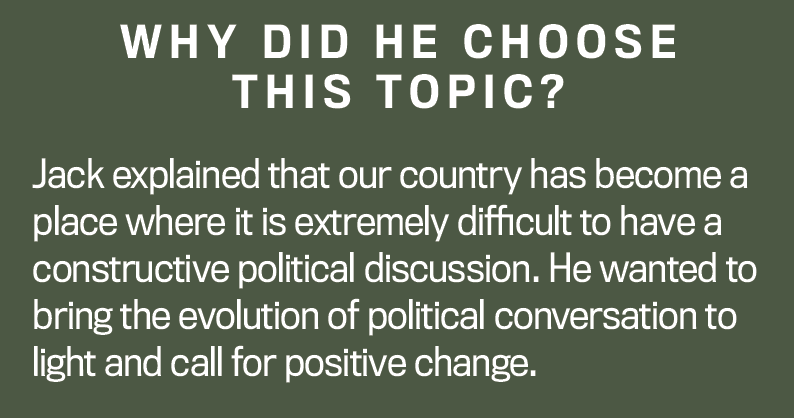
In the United States, the political climate has become red hot. Increasingly, people are influenced politically by the media they consume online; sometimes a new perspective unlocks a new ideology, opening the door to political awareness and discussion. But sometimes extreme rhetoric fuels conflict. Swallowed in confusion or boiling in anger, people often are not equipped with the skills to question and communicate in a civil manner. To create a more positive and constructive political climate, we must change the way we discuss politics with each other.
The way politics is discussed and debated has changed in the last 50 years. Political values were often passed down within families, and family discussions took place around the dinner table and in front of the television. Today, according to a recent survey by the American Psychiatric Association, one in five Americans polled skipped a family event due to disagreement on controversial topics, and the same number became estranged from a family member. Eighteen-to 34-year-olds were more likely to have engaged in conflict. Almost a quarter of those polled said they had blocked a family member on social media.
The rise of social media has led to tremendous change in the 21st century. Americans under 30 are increasingly using platforms such as Instagram, Snapchat, and TikTok at rates far higher than those over the age of 30, according to a 2023 Pew Research Center survey. These platforms enable instant sharing of information, a feat not possible 20 to 30 years ago. Social media empowers Americans to attack each other from behind their screens without having to face any repercussions for the harm they do to both to individuals and positive political discourse.
These platforms also allow politically-biased media such as right-leaning Newsmax and left-leaning Vox to push stories onto people’s social media feeds. I’ve seen this firsthand. Though most of my time on social media is spent following sports, I’m constantly hit with political campaign ads and posts from political influencers trying to change my perspective. Misinformation is often unregulated on these platforms, which only adds fuel to the flame.
Neighborhood Spotlight
Park Cities
Where the Park Cities Stay Connected.
Social media’s harmful effects on political discourse can be controlled, however. One tool for finding balanced information is Ground News, which rates stories according to bias and factuality. Ground News also informs readers on the ownership of news sources. Another emerging tool is middleware software, which is designed to enable users not only to recognize whether online content is credible, but also to customize their algorithmic feeds to allow fewer inflammatory posts and more posts from friends. Governmental action is necessary. Legislation should hold media companies accountable for misinformation and extreme rhetoric.
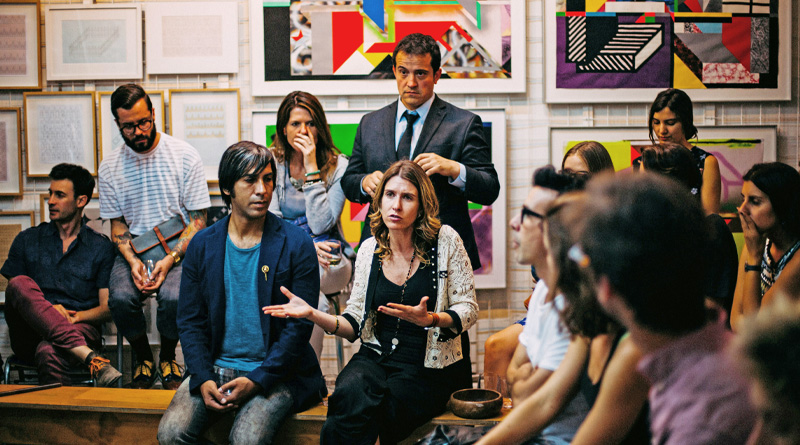
Young people must play a role in creating a better political atmosphere. It’s imperative that we seize the opportunity to have political conversations that drive forward positive change and promote a constructive political climate. We must push for our schools to teach civil discourse and include in-person discussions in the curriculum. We must push for more local political debate programs like the YMCA’s Youth & Government program, a nationally recognized civic engagement program designed to help teens navigate the world of politics. We must take advantage of the increasing number of university courses focused on constructive communication, such as “Disagreement” at Cornell University, “Democracy and Disagreement” at Stanford University, and “Difficult Conversations: How to Discuss What Matters Most” at Harvard University.
My generation holds the power to have meaningful and respectful political conversations. It is my greatest hope to live in a country where political discussion is fueled not by hate but by love and care for our community, and where it is our common desire as Americans to improve our society for ourselves and future generations.
Jack Sawyer is a junior at Highland Park High School. In his spare time, he enjoys watching sports and collecting trading cards. His piece is one in a series from students in the Moody Advanced Professional Studies modern media course. Visit peoplenewspapers.com to read opinion essays by students Noah Santoyo, Lane Pope, and Liliana Rodriguez that appeared in Park Cities People’s December, January, and February issues.