28 | Education: George Washington University, Northwestern University | Company: George W. Bush Institute
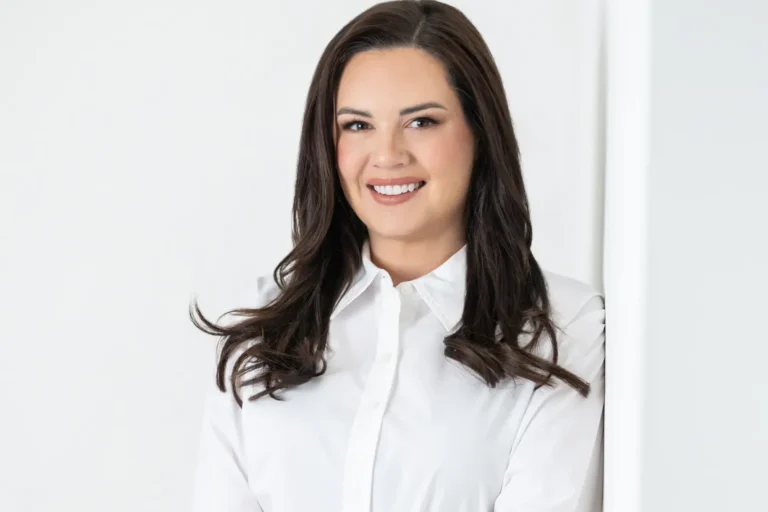
Through her work at the George W. Bush Institute, Hannah Johnson is saving lives and spreading the values of freedom, opportunity, accountability, and compassion around the world.
As the Institute’s deputy director, global policy, Johnson supports programs such as the President’s Emergency Action Plan for AIDS Relief, which has saved more than 26 million lives since its founding in 2003.
“Today, those babies are young adults like me and my 20 Under 40 peers,” Johnson said. “They are living healthy lives, contributing to their communities, and growing to be the leaders of tomorrow.”
Johnson also coordinates the Institute’s involvement in a partnership that aims to end cervical cancer and AIDS in Sub-Saharan Africa.
“I have had the privilege of meeting women who have benefited from the program,” she said. “Each one shares their gratitude for the generosity of the American people and America’s part in saving lives.”
Johnson comes from a family of dedicated public servants. Her great-grandfather, a teacher from Kentucky who turned to coal mining during the Great Depression, advocated for miners and their families in Washington, D.C. Her grandmother taught children in low-income mountain communities, and her mother is a longtime public health nurse.
In middle and high school, Johnson volunteered with her local health department advocating for healthy practices. During college, she assisted refugees who had recently arrived in the United States after years of uncertainty.
While interning for Kentucky Refugee Ministries in 2016, Johnson helped mothers, children, doctors, and lawyers who’d come to the U.S. to escape unthinkable circumstances navigate the resettlement process.
“Every person I met shared their gratitude not just for the work that the agency was doing, but for the community that surrounded them when they needed it most,” she said. “It was, and still is, one of the proudest moments and skyrocketed me to pursue the work that I have the privilege of doing today.”
What (or who) motivated you to get involved in the community?
I come from a long line of public service men and women. My great-grandfather was a teacher in the mountains of Eastern Kentucky during the Great Depression, went to work in the coal mines, and became a union advocate for coalminers and their families. He worked alongside them in the mines and with policymakers in Washington, D.C. to improve the health of his community. My grandmother followed in his footsteps, teaching children in low-income mountain communities. And my mother has been a public health nurse for over 30 years. As a young girl, I would often go with her to do maternal and child health home visits, early childhood development sessions, and advocacy events to protect women and children from domestic violence. Much like the Bush Center, the timeless values of freedom, opportunity, accountability, and compassion were embedded throughout my life and continue to positively influence the work I’m grateful to do today.
What is your favorite part of your current job or community involvement?
I am thrilled to be given the opportunity to educate policymakers and the American public on the incredible impact that U.S. global health investment has had on the world. Started by President George W. Bush in 2003, the U.S. President’s Emergency Plan for AIDS Relief is a shining example of this.
In the early 2000’s, the HIV/AIDS crisis had decimated entire communities, putting countries in Africa on the brink of collapse. Because of PEPFAR, over 26 million lives have been saved, and nearly 8 million babies have been born HIV-free. Today, those babies are young adults like me and my 20 under 40 peers. They are living healthy lives, contributing to their communities, and growing to be the leaders of tomorrow.
Are you where you thought you’d be when you graduated from high school?
I grew up in a mid-sized community in central Kentucky, where international opportunities were limited, but not obsolete. I was fortunate enough to have a wonderful high school French teacher who made it possible to pursue a future in international affairs. Coupled with the steadfast support of family, peers, mentors, and educators, I have been able to pursue opportunities far beyond what my 15-year-old self could even consider.
I’ve also grown up with generations of public servants like nurses, teachers, and delivery drivers. I knew that I wanted to help people across the globe. Through my work at the Bush Institute, I have been able to do just that. Now, I hope to take those lessons and pass them on to girls of all ages.
What was your first job and what did you learn from it?
My first job was teaching ballet and tap classes to children between 5 and 8 years old. It was an experience that taught me patience, robust communication skills, and the priceless value of compassion. I still use those skills today by educating policymakers and the American public on the value and impact that U.S. global health engagement has on people across the globe.
Was there a “lightbulb moment” that led you to your career? If so, what was it?
My first internship in college was at Kentucky Refugee Ministries in Lexington, Kentucky, in 2016. I had just finished my first semester of undergrad in Washington, D.C., where I was constantly surrounded by powerful leaders and some of the greatest academics and international affairs practitioners in the country. I felt as if I was, as Hamilton says, “in the room where it happens.” But that summer, I realized that the greatest impact happens at the ground level. I was the medical and public health intern in a small refugee resettlement agency in an area that was much less accustomed to populations escaping violence and persecution than Washington, D.C. I met doctors, lawyers, mothers, and children who had come to the United States with virtually nothing to escape unimaginable circumstances. I helped to guide them through the complicated resettlement process – setting up a home, enrolling their children in school, scheduling required doctor visits, and transitioning their skills and training to work in the United States. Every person I met shared their gratitude not just for the work that the agency was doing, but for the community that surrounded them when they needed it most. It was, and still is, one of the proudest moments of my life and skyrocketed me to pursue the work that I have the privilege of doing today.
What accomplishment are you the proudest of and why?
Women living with HIV are up to six times more likely to develop cervical cancer. In sub-Saharan Africa, cervical cancer is the number one cause of cancer mortality for women. Since 2018, the George W. Bush Institute has worked alongside the U.S. President’s Emergency Plan for AIDS Relief (PEPFAR), UNAIDS, and the private sector to address this issue. The partnership collaborates closely with governments in 12 countries in Eastern and Southern Africa with the highest HIV and cervical cancer rates to ensure women survive both deadly diseases. Last year, we celebrated 10 million cervical cancer screenings since the program launched. I have had the privilege of meeting women who have benefited from the program. Each one shares their gratitude for the generosity of the American people and America’s part in saving lives. Seeing firsthand the incredible impact of Go Further is the highlight of my work and career.
Which leadership skills have been the most challenging for you to develop and why?
I have learned that leadership doesn’t have a timeline. As a young person new to their career, it can be difficult to develop the confidence to guide a discussion, present recommendations, and make decisions. There’s no set course for overcoming this. However, I’ve learned to overcome these fears by looking to the leadership styles of more senior peers that I admire most, to seek their feedback, prepare, and jump in headfirst when the timing feels right.
What do you see is the biggest challenge facing Dallas right now? If you had the connections and resources to change that, what would you do?
Dallas is one of the fastest-growing cities in the country. Its opportunity and impact have also been elevated to the world stage. This summer, Dallas will be one of several locations for the FIFA World Cup, bringing together athletes, dignitaries, and fans for a common celebration.
The World Cup also offers an opportunity to showcase the compassion of the American people and to show that, regardless of country, religion, creed, or team, the global community has more in common than we think. I’m excited to see Dallas’ leadership rise to the world stage in our community and for the relationships that will be strengthened in turn.
If someone made a movie about your life, what would it be called and who would play you?
One of my favorite books is Hill Women by Cassie Chambers. It’s a memoir, but she does an incredible job of telling the values of people in Eastern Kentucky — family, determination, compassion, and grit. It also has a great title that I would selfishly steal. I would like to think that Anne Hathaway would play me.
What is your favorite local restaurant or shop?
Malai Thai
What’s on your bucket list?
Safari in Kenya to see the Great Migration or Cape of Good Hope in South Africa.
What do you have in mind for after 40?
Continue to try to make a difference in the lives of women and girls across the world by elevating the voices of the next generation of leaders.
Is there anything else you think we should know about you?
I’m a huge Bravo fan. There’s always a sense of comfort in watching the lives of Real Housewives.
Author