While for most Americans the conflict in Iran is more than 7,000 miles away, it’s close to home for members of the SMU Association of Iranian Students.
The U.S.-Israeli strikes on Iran that began on Feb. 28 and Iran’s retaliatory attacks have upended travel to and from the region and garnered headlines around the world.
SMU Association of Iranian Students member Iman, who is working toward a doctorate in economics, said he receives calls from family members back in Iran almost daily. He’s unable to call them. He asked that his last name be withheld due to concerns about his family’s safety.
“I think people need to just listen to what Iranians want and say, even though Iran is in a total Internet blackout,” Iman said. “The Iranian diaspora is trying to be their voice because we still have phone calls with them and we still have some sort of connection with them.”
He said the SMU Association of Iranian Students provides community and a necessary support system for its membership, which includes both Iranian Americans who were born in the United States and Iranians who migrated to Dallas to study.
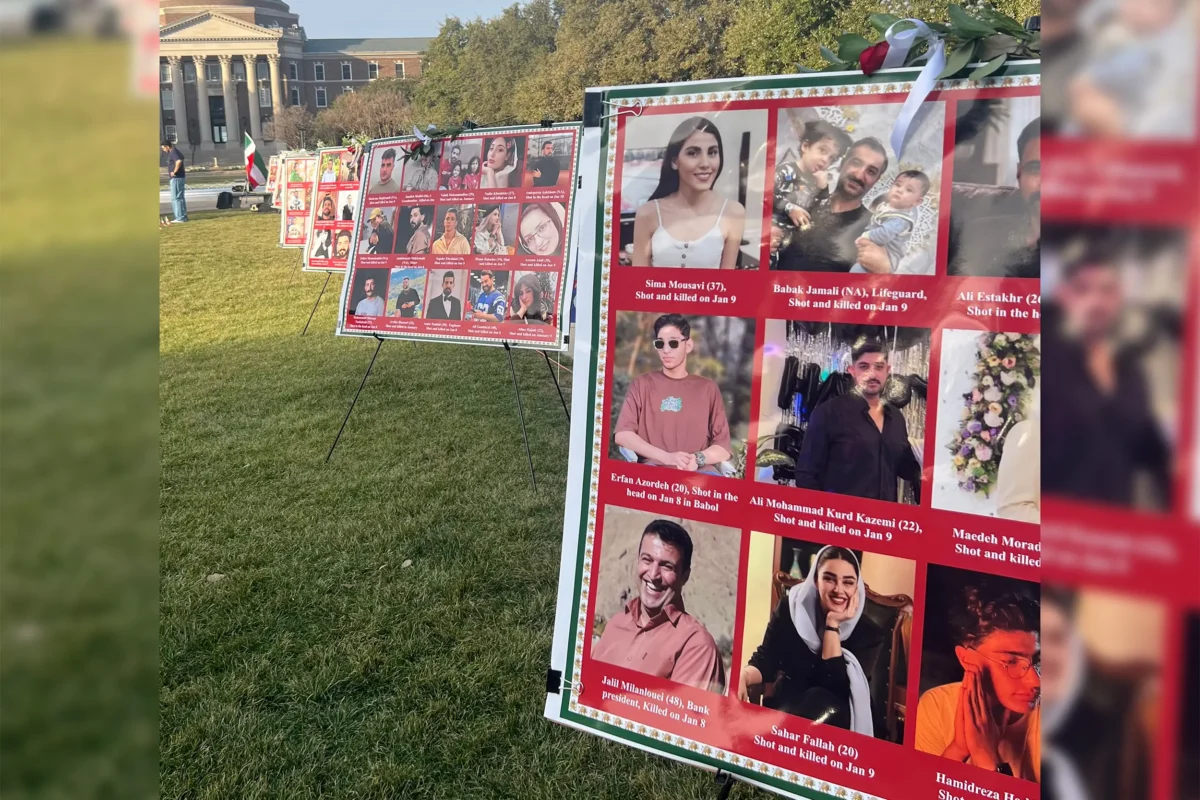
Even before the recent upheaval, the student organization sought to raise awareness of the plight of Iranians. The group held a vigil in early February to honor those who had lost their lives due to the brutality of Iran’s authoritarian regime, the Islamic Republic of Iran.
SMU Association of Iranian Students president Melody Nadery said that, while the current conflict has put a chill on public events for the group, the vigil was important. During that event, the group set up a display, which included photos of people impacted by violence in Iran, on the Dallas Hall lawn to honor the lives lost to the regime.
“It’s been nice to know that there is an organization on campus where we can all unite and gather during this really hard time,” Nadery said. “It’s really difficult to know that your family and friends are over there, you don’t know how they’re doing, you don’t know if they’re alive.”
Nadery said that she had been moved by the reaction the group received to its three-day display on campus and vigil.
“So many people who are not a part of our association, who didn’t seem like they were Persian or didn’t seem like they were Iranian, they came up, and they were asking questions and they were like, ‘my prayers are with you and your family, I’m here if you need anything,’” Nadery said.
Iman, who was also involved in the vigil, said he appreciated the supportive response from passersby.
“It was good to raise awareness. A lot of people stopped to talk to us,” Iman said. “I think it was overall a very positive reaction.”
Author