Whether your dining room is used often or reserved for special occasions, it’s an important area in your home and deserves to be beautifully designed. The following pointers can be applied to dining rooms of many different shapes and sizes.
For a dining room that feels too large or small, you can use paint colors to make the space appear more open or more enclosed. A deep color gives the room a cozy feel, while cream and pale colors can help open up a small dining room. If you’re putting your dining table in a corner area, try combining a banquette with dining chairs to save space. Use the same upholstery fabric on both the banquette and chairs to tie the mixed seating together.
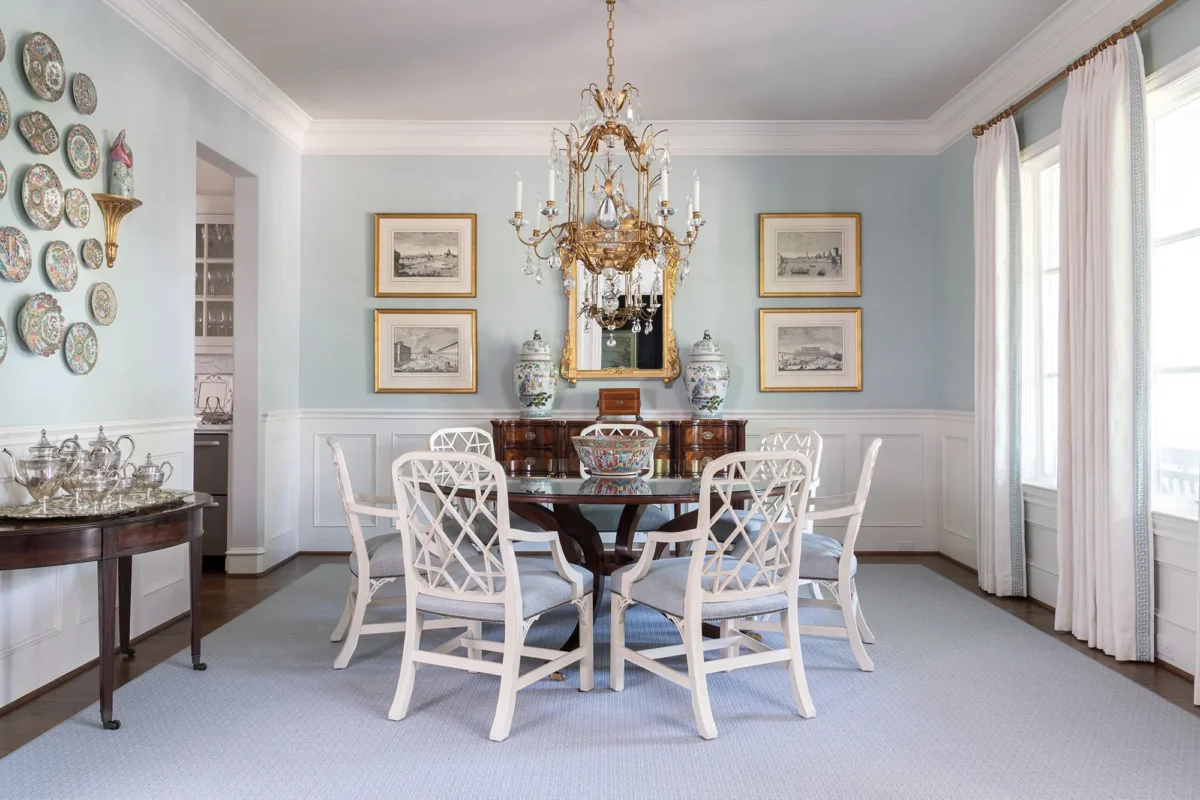
While rectangular tables are suited to hosting a large party in a rectangular room, round tables encourage conversation and are great for square dining rooms. Forty-two inches is the ideal width for a rectangular table.
To avoid overcrowding, leave three feet of room between the dining chairs and surrounding furniture or walls. An area rug needs to extend at least 28 inches from the edge of the table on all sides so guests can scoot their chairs out without running over the edge of the rug. If your dining room doesn’t have enough space for a rug, it’s better to not have one at all.
The textures and colors of your dining room furniture should complement the rest of your home. Steel and glass tables are a good fit for contemporary homes. Polished wood has a formal look, while rougher textures like pine or distressed finishes convey rustic charm.
Not sure what to decorate your dining room walls with? Aside from artwork, you might consider using photography, wallpaper, mirrors, a plate collection, or decorated shelves. A chandelier should be hung 30 to 36 inches above the table to prevent bulb glare from being visible in the eyes of seated guests. Don’t hang downlights directly over chairs, or else you’ll create dark shadows on guests’ faces.
You can always consult an interior designer like myself if you’re still having trouble getting the most out of your furniture and space. After all, you’ll want your dining room to be one you use often, whether you host formal dinners or use it as a family hangout space. A thoughtfully designed dining room naturally invites people to come together and enjoy each other’s company, no matter the occasion.
Margaret Chambers, a registered interior designer (RID) and American Society of Interior Designers (ASID) member, leads Chambers Interiors and Associates. Her colleague Caitlin Crowley helped edit this column. For more ideas and articles, follow Margaret on Instagram at @chambersinteriors, or visit her website at www.chambersinteriors.com.
Author