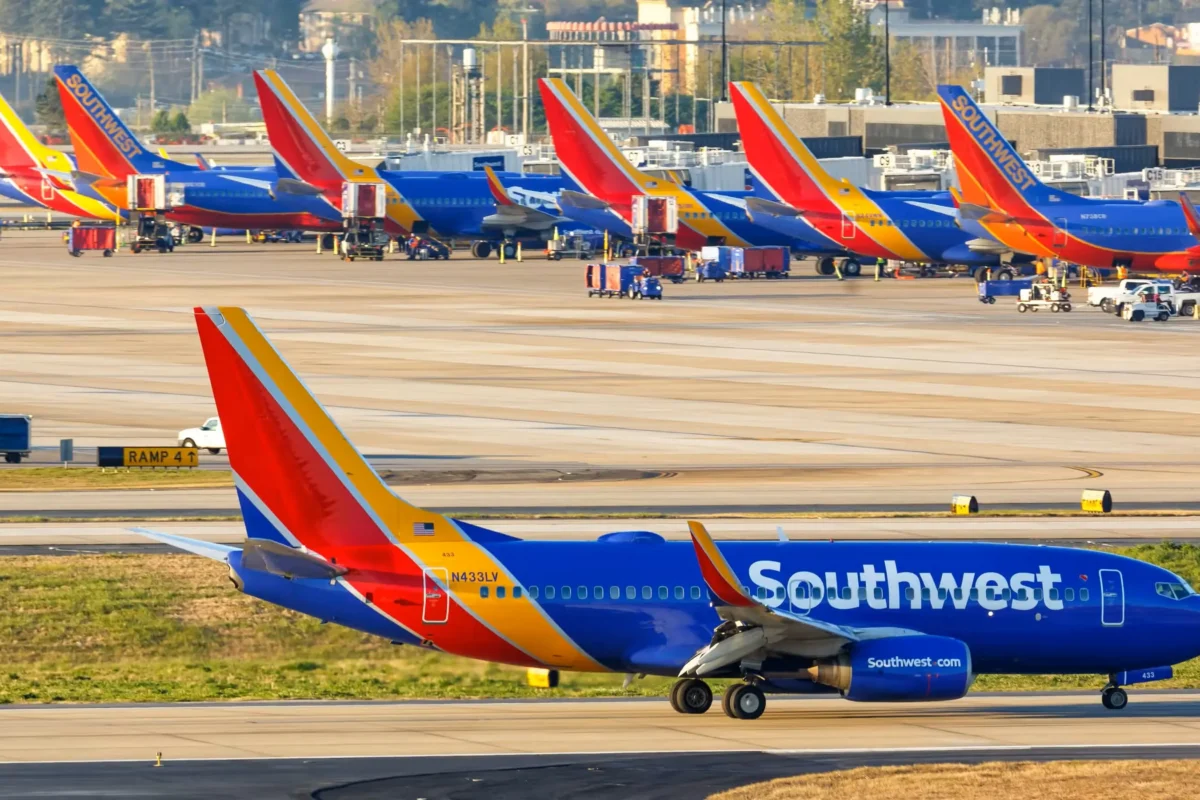
It’s been four months since Southwest Airlines implemented commercial, operational, and cost efficiency actions that included jettisoning its open seating policy and charging for checked baggage. In a (pea) nut shell, those initiatives, while controversial, have benefited the airline’s financial performance.
The company’s Q1 earnings report, the first since implementing these changes, indicates strong customer demand and increased profitability for the airline. The report says, “Demand for our new product offerings drove record first quarter revenues,” despite rising fuel costs and the rumblings of long-time Southwest Airlines customers who are dissatisfied with the company’s paradigm shift.
I’ve been flying Southwest Airlines since the mid ‘80s, when I would sit backwards and smoke cigarettes on flights to and from college. Thanks to the genius advertising of Austin’s GSD&M and the wit and charm of Herb Kelleher and Colleen Barrett, customers were “LUV” bombed and fell deeply, loyally in “LUV” with the brand.
It was still considered a low-cost carrier, back then, but with friendly service and enjoyable in-flight experiences. Even that pesky Wright Amendment, which prohibited direct flights from Dallas Love Field to any state not touching Texas’ borders, was inconvenient but not a deal breaker.
Customer Frustration Shows
But times have changed, as they must. Profit margins in the commercial airline industry are very thin, ranging between 2.7% and 3.3%. Doesn’t everyone want to fly on a financially successful airline at which employees are well paid and motivated to perform well, maintain the equipment, and have the very best safety standards? Of course. So policies must change.
In an informal survey of 100 Park Cities neighbors, fellow travelers to and from Love Field, and friends in other Southwest destinations, 80% of them voiced displeasure at Southwest Airlines’ new assigned seating policy and checked bag costs. A set of 80 respondents isn’t exactly a statistical tsunami, but it tracks with people’s general resistance to change.
Here are some of the comments from respondents who dislike the new policies:
“Used to love them — had companion pass and was a frequent flier. I will avoid them at all costs. Their system has become absolutely horrid.” M.C.
“Not a fan. Flew last weekend. Had to gate check my bag because was in the last 3 boarding groups. Also, doesn’t seem to be a rhyme or reason to what boarding group you are in, for the most part. Or if there is — they should explain it. Five of us traveling — exact same fare and booked at exact same time, 3/5 had a different boarding group,” says S.O.
“Not the SWA we loved.” L.A.
“They are basically just like American or any other airline now. Slower to board and de-board bc ppl opt to bring on roller board vs paying for checked luggage. On several of my recent flights, they no longer allow ppl to move from assigned seat, even if there are empty rows. It’s fine, just no longer any competitive advantages other than Love Field being close for those in the hood.” L.W.
Business Travelers Speak Up
The business traveler responses were more accepting, which supports the statement by Andrew M. Watterson, company Chief Operating Officer, that “Managed corporate (traveler) revenue increased 16% in the first quarter of 2026 and 25% in March, marking the largest quarter and month in our history.”
“I have traveled several times on SWA the last few weeks. I like the new seating policy. Better than going through the cattle guards. IMO.” M.C.
“I liked the old system just fine, hated the first few months of the change, but it is getting slightly better. A List Preferred now has a proper boarding group, etc. It does feel like it’s more expensive — maybe due to Iran gas price situation, maybe not.” A.C.
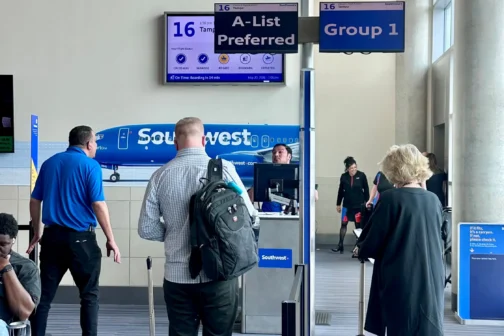
One frequent business traveler is quite pleased with the changes.
“I absolutely love it. I don’t have to get there super early to line up to get carryon space. I get there when I get there and my seat is waiting for me. People need to pay for their bags. They were never free, just included in the ticket. I never liked subsidizing others’ luggage when I never checked bags. I was hoping we would see a decrease but sadly no.” C.T.
Flight Attendant Feedback
So, how do flight attendants feel about the new seating policy. I spoke to one Southwest Airlines flight attendant on the condition of anonymity who said, “I feel like it was a much-needed change. I think it makes the boarding process easier, faster, and more efficient. People know they have a seat and can go directly to it and are not left wandering around at the end of boarding looking for an empty seat.”
She added that the implementation was turbulent at first, but is getting smoother as crews and passengers become more accustomed to the new policies. “It’s been a learning process for everyone.”
I asked her about passenger push back and she said, “the only time I’ve had passenger pushback is when a flight is fairly empty and people are crowded in the back. People want to spread out or move to the front of the plane. This isn’t always possible because it’s not the same fare class. Assigned seating is assigned seating. You don’t rent a basic sedan and get a Mercedes rental car.”
Makes sense, when you’re a passenger on American Airlines you can’t book a basic fare and sit in premium economy so why would you expect do be able to do that on Southwest?
Where’s the LUV?
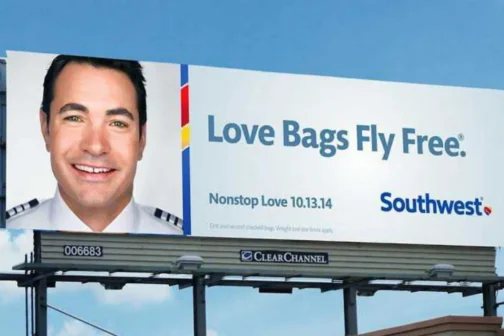
It’s just that, for 55 years, Southwest Airlines has operated with a “we’re not like everyone else” business model, with open seating, free checked baggage, and a very “luving,” customer-centric culture.
Clever billboards and ads promoting free checked baggage — “Pack up, don’t pay up!” and “Bags Fly Free!” — disappeared seemingly overnight. Based on the brand’s historic sense of humor and “we’re of the people for the people” marketing messaging, this new policy seems a bit off brand.
The company’s communications plan for the new policies centered around the empowering notion of Choice. You can choose to be basic (a real burn in today’s vernacular) with a Basic, bare-bones fare that puts you in boarding groups seven or eight, leaving no bin space left by the time you board so you have to gate check your bag, or upgrade with Choice, Choice Preferred, or Choice Extra. I guess it’s “Choice” over “LUV.”
Pay Up or Stay Home
Customer frustration isn’t hurting Southwest. The company reports engagement in the Rapid Rewards program continues to strengthen with new enrollments up 37% this quarter. Watterston says customers are voluntarily paying more for a seat. “So once the assigned seating and extra legroom went in place, we saw an uptick both from current customers, but also new customers,” he told investors. “Customers reacted to the changes as the company thought they would.”
The summer travel season kicks off in a week. How will Southwest be impacted? With revenue ticking up thanks to the new policies and its own cost management strategies, plus the likelihood that Southwest will pick up some displaced customers of the now defunct Spirit Airlines, it looks as sunny as the airline’s new international destination, St. Maarten.
Author