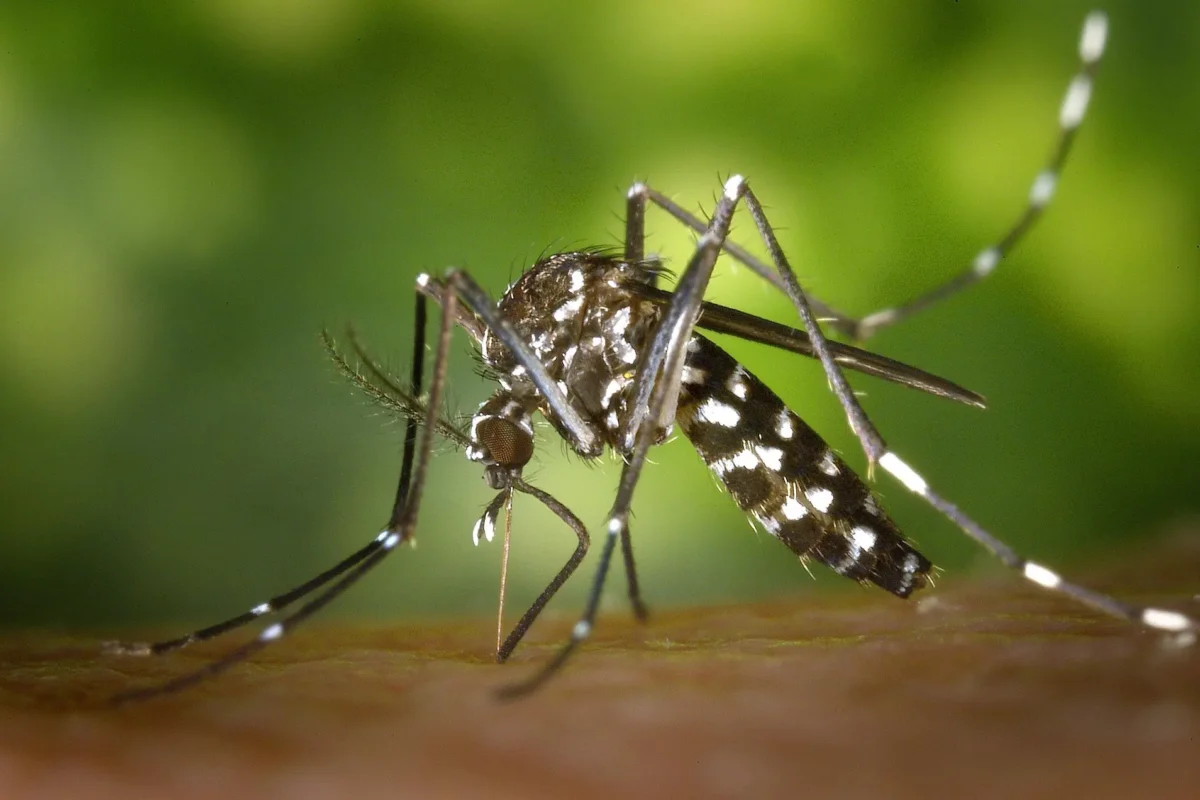
Summer is prime time for mosquitoes, as well as municipal spraying to stop the spread of mosquito-borne illnesses. But how do cities prevent their mosquito-control efforts from impacting pollinators, such as bees and butterflies? Here’s the buzz.
Both the Town of Highland Park and City of University Park use organic larvicides, such as Bacillus thuringiensis israelensis (Bti) which is found in mosquito dunks, to wipe out mosquitos before they become adults that can spread disease.
They rely on an EPA-approved pesticide to quickly reduce the adult mosquito population as a last resort when a mosquito pool (one trap’s catch of mosquitoes) tests positive for a mosquito-borne illness such as West Nile Virus or number thresholds are met.
“This strategy is the most effective, economical, and safest method for mosquito control because mosquito larvae are minimized, thus reducing the need for adult mosquito control, and subsequently reducing the impacts of control measures on non-target organisms,” the town of Highland Park’s mosquito control policy states.
Dallas County Health and Human Services and Park Cities officials say they work to reduce the potential impact of pesticides used in fogging or spraying on beneficial insects.
University Park spokesperson Paige Ruedy said the city has stopped preemptively spraying for mosquitoes before outdoor summer events, such as July Fourth festivities. Instead, University Park only fogs in areas where mosquitos in traps set up around the city have tested positive for a mosquito-borne illness.
So far this year, parts of the city have been sprayed for mosquitoes twice. For more information on the city’s summer 2026 mosquito control efforts, click here.
Highland Park mosquito treatments also target areas with positive trap results for the presence of mosquito-borne diseases, according to the town’s director of policy development and strategic initiatives Letecia McNatt.
In contrast to University Park, McNatt said the town does spray for mosquitoes before some special events.
“The Town’s mosquito control program is guided by recommendations from Dallas County Health and Human Services and applicable state agencies,” McNatt added.
Both the town and city offer free mosquito dunks to residents and encourage them to eliminate standing water.
Dallas County Health and Human Services Public Information Officer Edrea Au said DCHHS’ environmental health division reviews best practices from regulatory agencies to ensure mosquito control is accomplished “safely and effectively while protecting public health and the environment.”
“DCHHS follows integrated mosquito management practices, which include surveillance, source reduction, public education, and targeted control measures based on surveillance data and public health risk,” Au said.
Author