Long before FIFA fever hit Dallas, a local physician reshaped the way the world’s most celebrated soccer team prepared for its greatest triumph.
When Brazil defeated Italy in the 1970 championship match, the world focused its attention on one of the greatest teams ever assembled, led by soccer legend Pelé.
But few fans knew that a doctor in Dallas had helped build the fitness foundation for Brazil’s historic championship run.
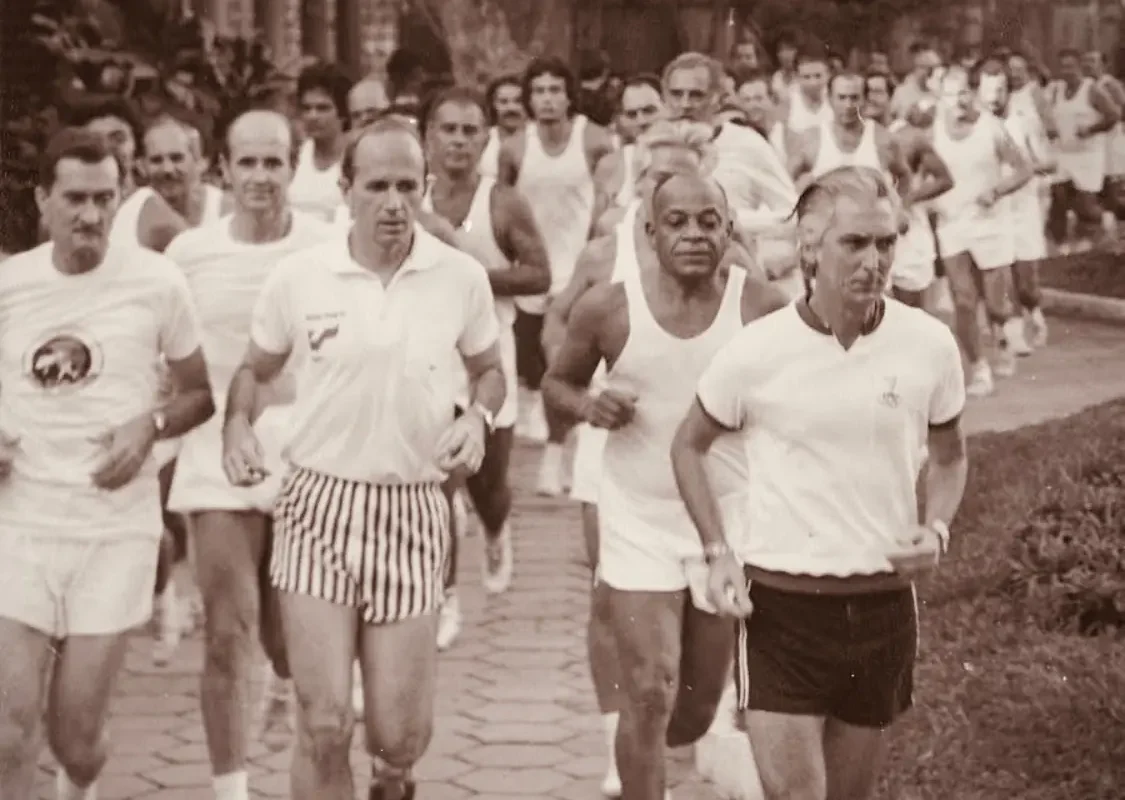
The connection began in 1968 when Brazilian military physician and soccer coach Claudio Coutinho attended a presentation by Dr. Kenneth Cooper in Fontainebleau, France. At the time, Cooper’s emphasis on aerobic conditioning was groundbreaking, introducing endurance training as a competitive advantage in soccer.
“Ahead of the 1970 World Cup, Coutinho approached me and asked me to develop a program for the Brazilian players,” Cooper recalled. “I suggested to the team that if they followed my recommendations … they’d play better in the second half of each game, be less likely to suffer injuries, and prolong their professional careers.”
The Brazilian players embraced Cooper’s philosophy, logging 20 miles of weekly runs at the base of Sugarloaf Mountain in Rio de Janeiro in preparation for the tournament.
The results became part of soccer history.
Brazil won all six matches en route to the championship before defeating defending champion Italy 4-1 in the final. After entering halftime tied 1-1, Brazil dominated the second half — a performance Cooper said reflected the endurance benefits of aerobic training.
Cooper’s relationship with the global soccer community continued for decades.
His 12-Minute Cooper Test, designed to measure aerobic fitness by calculating the distance a person can run in 12 minutes, became an international benchmark for qualifying soccer officials for competition.
Before the 1994 World Cup, FIFA sent 55 referees and linesmen to the Cooper Aerobics Center in Dallas for fitness testing and training.
“During that time, we had a chance to train them, evaluate them, put them on the treadmill, obtain blood studies,” Cooper said, adding that the facility became a destination point for soccer officials throughout the FIFA tournament.
The legacy of that partnership continues today.
Each year on Sept. 15, the city government of Pelé’s hometown of Santos, Brazil, promotes exercise and educational programs as part of “Cooper Day.”
Claudio Coutinho’s daughter, Claudia, recently joined 95-year-old Cooper for the launch of his latest book, Grow Healthier as You Grow Older, where the two reflected on the friendship that began more than five decades ago.
When Dallas recently hosted several of the 2026 FIFA World Cup’s most anticipated matches, the fitness pioneer’s influence on the global game came full circle.
Fortunately for Cooper, this year’s tournament never forced him to choose between the two countries that have defined much of his soccer legacy. Before the tournament began, however, he already knew which team he would have backed.
“With the close relationship with Brazil as well as the United States team, I will have some difficult decisions to make if they end up playing in the finals,” Cooper reflected. “But my loyalty will be with the USA.”
Author