Abigail Williams, founder and chief executive officer of United to Learn, knows how important the relationship between school and community can be in developing a child.
Growing up in Seguin, Texas with a single mom who worked multiple jobs to keep her three children afloat, Williams was grateful for the teachers who pushed her to recognize her talents and potential.
“School was my safe place. It was a place I could blossom. And I believe every child deserves that,” she said.
Refusing to settle for a median standard in public education, the school advocate is determined to provide future generations with equal access to learning.

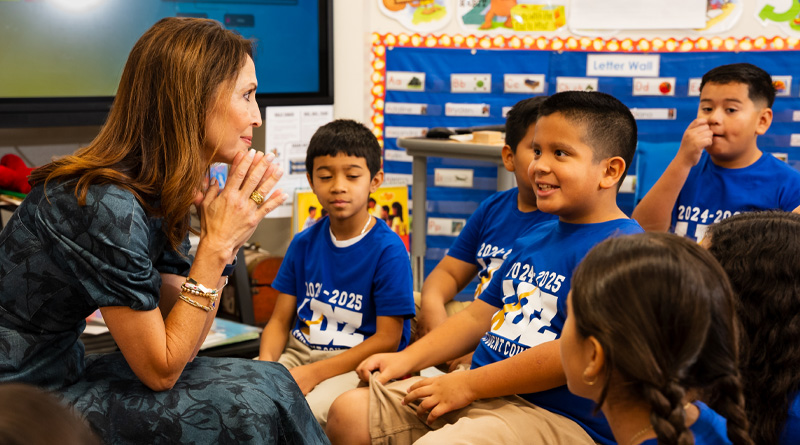
“Every child wants to do well, but there may be barriers beyond their control that keep them from being present or ready when they arrive each morning. A child who, after walking into school, can feel safe and calm will be a child ready to learn,” she said.
Williams sits at the helm of United to Learn, an education nonprofit with a vision to accelerate student achievement across Dallas ISD. The organization’s wrap-around model brings social emotional learning, educational tools, training, tutors, campus improvements, student experiences, and educator wellness touchpoints into Dallas public schools.
“When a teacher is able to request something that makes an immediate difference in their respective classroom, the ripple effect is substantial,” she said.
Before launching United to Learn, the public education advocate served as vice president and director of charitable service for Goldman Sachs & Co. and helped found the Uplift Williams Preparatory School, a K-12 free tuition charter school.
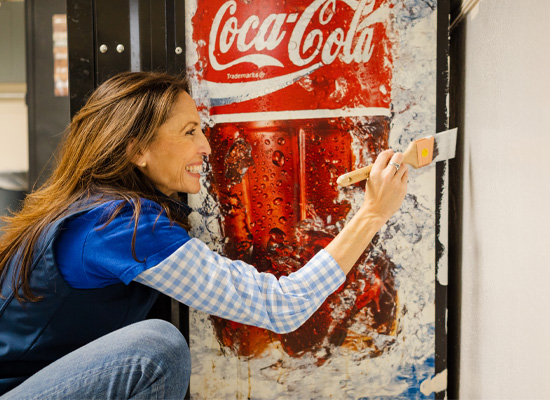
Working alongside individuals and companies, Williams set out to build a bridge between community and its most valuable asset.
“The Dallas community is a very generous and caring community, and educators, investors, and volunteers continue to show their commitment to building success for students, but we needed a space to align on a real picture of what that looked like and ensure that picture wasn’t just pretty colors but steeped in sound research,” she said.
United to Learn works arm-in-arm with Dallas ISD to ensure alignment with district goals and has plans over the next two years to expand curated support district-wide, ultimately benefiting more than 66,000 students and nearly 5,000 teachers across 137 schools.
“United to Learn can only exist and have impact with a true willing and ready partner, ” said Williams. “Our role is to be an accelerant of student success; we want to convey the message ‘we are your partner’ and our model is most powerful because we are proximate.”
Altering the conventional ideas of what a public school looks like requires lifting the veil to allow the well-intentioned community to understand the difference hands-on improvements make, Williams said.
“In our founding days, I remember simple requests to replace well-intentioned used book deliveries with more focused grade appropriate high interest texts. Through conversations with school leadership, we were able to align our mutual goals to allow programming and investments to be used smarter and go farther.”

The community that surrounds Williams’ efforts in building knowledge, empathy, and confidence in future generations has witnessed how her steady tenacity has paid off.
“Watching Abby grow into a successful collaboration what started as a few people working around a table to enact change, comes from her ability to authentically listen,” said United to Learn board member Karen Pollock.
Alan Cohen, Child Poverty Action Lab founder and United to Learn board member, pointed out that the endurance created by Williams does not happen overnight.
“She and her team keep showing up with intentionality to build, brick by brick, a foundation so strong, I believe we’re only at the starting line of the collaborative impact United to Learn will make on our children,” he said.
While Williams continues to exude a quiet humility, she has proven to her community that she’s in it for the long haul.
And, she’s not afraid to stand up for what she believes.
“This is serious work. No one, nothing, is more precious than a child — our children. And what they need most is to know their community believes in them and will meet them right where they are,” she said.
“Every child deserves the opportunity to be loved, accepted, and believed in.”
Author