A popular Dallas nature trail is swapping gas-powered mowers and herbicides for something a bit woollier this year.
Each spring and summer, Northaven Trail bursts into bloom with native wildflowers. But before those flowers put on their show, the ground needs serious prep — clearing out thatch, loosening compacted soil, and giving seeds a shot at survival.
Northaven TAILS, a pilot project involving targeted grazing in the trail’s no-mow zones, has brought in a rotating herd of goats and sheep to do the landscaping.
The organization spearheading the program, Friends of Northaven Trail, reported it being one of the first of its kind in Texas to use grazing in an urban setting. The grazing project hopes to implement a low-impact, high-reward way to restore native habitat and reduce reliance on machines and chemicals.
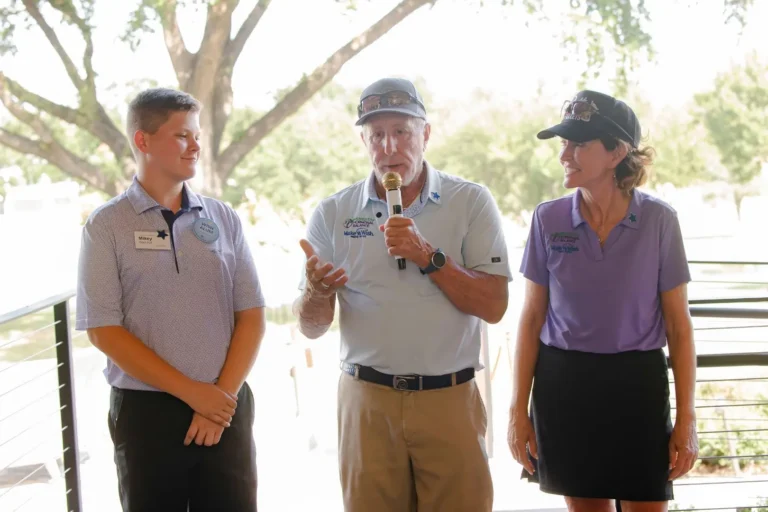
“The project is practical, sustainable — and unexpectedly fun to watch,” said Dorothy Buechel with Friends of Northaven Trail.
Buechel explained that the herds of goats and sheep will eat invasive plants, naturally fertilize the soil, and help create ideal conditions for native wildflowers to thrive, promoting biodiversity while being wildly entertaining for the 30,000+ people who walk, jog, and bike the trail every month.
“Goats and sheep are the cutest crew in conservation, restoring native habitat with a natural, low-impact touch,” said Will Dawson, who is heading up the Northaven TAILS project.
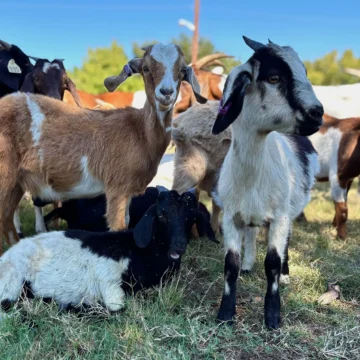
Dawson shared some insight about the goats communication style, noting that while the sound of their bleating may have the quality of a shriek, it’s actually a natural form of language for the mild-tempered animal.
“When goats vocalize loudly, their bleats can sound surprisingly human-like. It is a high-pitched, drawn-out sound that resembles someone yelling or even shrieking. It’s often described as a mix between a child screaming and a person shouting ‘ahhh’ or ‘eee,’” he said.
On the afternoon of my visit, Dawson had been supervising the hundreds of animals since dawn and was relieved they’d already lived up to their reputation for an unquenchable appetite and industrious work ethic.
He was also happy the location device placed in the meadow to help keep track of their progress hadn’t been gobbled up yet.
“It’s a 50/50 chance it’ll stay put and not end up in a goat’s belly,” he said.
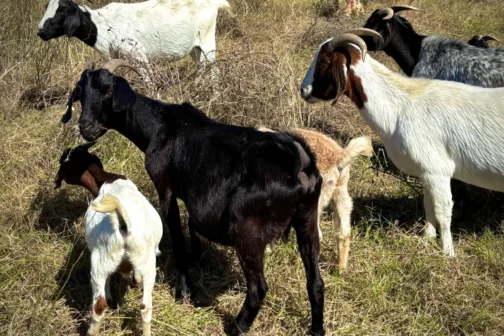
I wasn’t the only one inching closer for a close-up view of the four-legged eco-friendly ambassadors. Trail hiker John Reese was excited to welcome the bearded environmentalists.
“They mind their own business, get straight to work, and are a lot less noisy than a mower,” he joked.
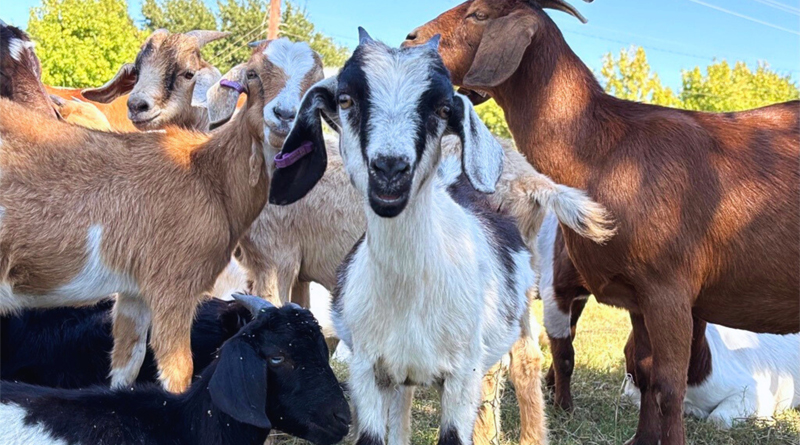
As the herd slowly moved west along the trail, a few horned fellas used some headbutting to establish their spot in the pecking order. And it didn’t take very long to pick out the goat-getters and showboaters.
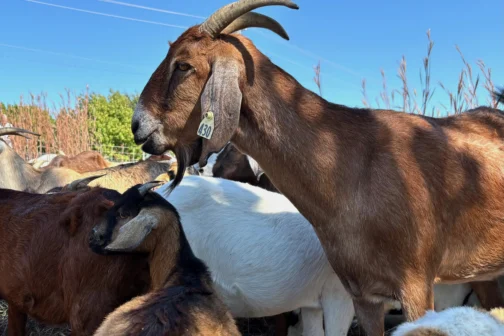
But it was The G.O.A.T. — flanked by his wide-eyed entourage — who struck a pose and lifted his nose just enough to suggest he understood the assignment.
After making brief eye contact with the sign urging visitors to keep their distance, I opted for the money shot.
Just as the sign warns, a low electric fence designed to keep the wooly creatures from drifting into the road after satisfying their munchies, emits a light, snappy electric current. Since the goats had the sense to steer clear, the netting apparently exists to teach overzealous journalists a lesson in respecting boundaries, both literal and metaphorical.
But honestly? Worth it.
The shock will fade.
The photos? They’ll be the stuff whispered about in barnyards across America.
Author