37 | Education: Marriott School of Business, Brigham Young University; SMU Cox School of Business | Company: Eiseman Jewels
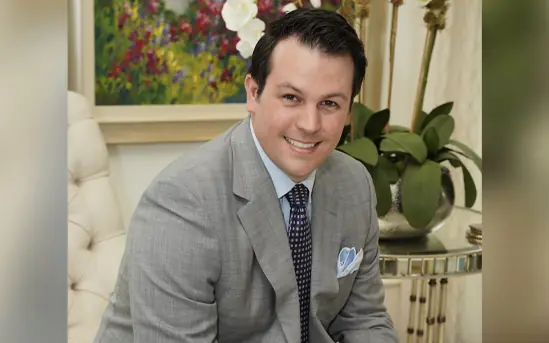
Taylor Frank doesn’t just sell luxury — he curates it.
As president of Eiseman Jewels, he has turned a sharp eye for fine jewelry and timepieces into a meaningful experience where every client interaction reflects his signature blend of expertise, intention, and service-first leadership.
“Every decision I make is guided by a commitment to elevating experiences and maximizing value for both clients and team members,” Frank said.
A graduate of the Episcopal School of Dallas and a Park Cities resident, his connection to the community runs deep. Through Eiseman Jewels, Frank serves his neighbors and clients, supporting the vitality and traditions of the area.
His volunteer work extends to Community Partners of Dallas, Vision for Tomorrow, the NorthPark Merchant Association, and his local church congregation, reflecting a dedication to advocacy, mentorship, and service — especially for children and families in need.
“I have always felt a strong responsibility to stand up for those who need support or a voice to help share their story,” Frank said.
What (or who) motivated you to get involved in the community?
I have always felt a strong responsibility to stand up for those who need support or a voice to help share their story. Community Partners of Dallas has been an organization Eiseman Jewels has supported for many years and seeing firsthand the life‑changing impact they have made has inspired my deeper involvement. CPD’s President and CEO, Joanna Clarke, has been especially influential in helping me understand the organization’s mission, urgency, and ability to advocate for children facing incredibly difficult circumstances.
My involvement with Vision for Tomorrow is deeply personal. Seeing my son navigate the daily challenges of aniridia has given me a new perspective on resilience, empathy, and advocacy. It is a condition with no cure and significant obstacles, and witnessing others face it with strength motivates me to continue raising awareness and supporting efforts toward future treatments and prevention.
What is your favorite part of your current job or community involvement?
In both my professional role and my community involvement, my favorite part is working with people. Building lasting relationships with clients, collaborating with an exceptional team, and learning from them daily is incredibly fulfilling. Likewise, working alongside volunteers, nonprofit leaders, families, and individuals we serve has been deeply motivating.
I am a people person by nature, and serving others is where I feel my time, energy, and resources are used most meaningfully. Whether in business or in the community, helping people feel supported, valued, and understood is what brings me the greatest sense of purpose.
Are you where you thought you’d be when you graduated from high school?
Not exactly — and that’s part of what makes the journey meaningful. Growing up, I never felt a definitive calling to a specific industry or career path. What I did know, even at a young age, was that I was a people person and that my ability to connect, communicate, and adapt would serve me well wherever I landed.
Like many students, I hoped a career aptitude test during my senior year of high school would provide clarity and direction. Instead, it offered a wide range of possibilities — from a rabbi to a comedian —which only reinforced how uncertain I felt about my future at the time. While I didn’t leave high school with a clear roadmap, life had a way of revealing direction through experience.
Over time, my people‑focused skill set naturally led me toward sales and leadership roles, where relationship‑building, service, and trust are essential. That path ultimately guided me to a career I’m deeply passionate about today. Looking back, while my destination wasn’t clearly defined early on, the skills I relied on then are the same ones that continue to shape my success now—and I wouldn’t change a thing.
What was your first job and what did you learn from it?
My first jobs came early and took many forms, including working as a basketball scorekeeper at the YMCA, running my own neighborhood lawn‑care business, and later working my first retail position at Cole Haan in Highland Park Village during my senior year of high school. Each role taught me responsibility, work ethic, and the importance of showing up prepared and dependable.
My first retail job at Cole Haan was especially formative and ultimately planted the seed for my career. It helped me discover my natural ability to connect with people, understand their needs, and build trust through service. I learned to be motivated by results, take pride in personal customer service, and appreciate the impact a positive client experience can have. Those lessons made my transition into luxury retail and jewelry seamless and continue to shape my approach to leadership and sales today.
Was there a “lightbulb moment” that led you to your career? If so, what was it?
During my time at Tiffany & Co., I was driven by a strong desire to grow, lead, and build a long‑term career within a world‑class luxury organization. I was fortunate to be recognized by senior leadership for my results‑driven approach and leadership capabilities, and I gained invaluable experience within a highly structured, global retail environment. Over time, I came to realize that my strengths and aspirations were best suited to an organization where I could have broader influence, move more nimbly, and contribute directly to both day‑to‑day operations and long‑term strategy.
That realization led me to Eiseman Jewels. When the opportunity to join as Managing Director became available, I was immediately drawn to the company’s reputation as a highly respected, family‑owned jeweler with deep roots in the community and an unwavering commitment to excellence. I saw an opportunity to apply the leadership, salesmanship, and operational skills I developed at Tiffany & Co. in a setting where I could help preserve a legacy while also driving growth and innovation.
Upon meeting Richard Eiseman and learning more about the company, its people, and its loyal clientele, I experienced what I often refer to as my “light bulb moment”—the realization that Eiseman Jewels offered what I had been seeking professionally. It was a place where trust, entrepreneurial thinking, and meaningful impact were encouraged, and where I could play a direct role in shaping both the day‑to‑day operations and the long‑term future of the business. The freedom to take thoughtful risks, drive results, and help unlock the organization’s full potential was both energizing and deeply fulfilling.
Progressing from Managing Director to President has been the most rewarding chapter of my career. I am profoundly grateful to Richard Eiseman, his family, and our exceptional team for the opportunity to help build a truly remarkable business — one that represents the finest luxury brands in our industry while serving an engaged, sophisticated, and loyal client base throughout the Metroplex and beyond.
What accomplishment are you the proudest of and why?
The accomplishment I am most proud of is my ability, throughout my career, to consistently create results and leave every organization stronger than I found it—both operationally and culturally. Regardless of my title or responsibility, I have focused on building trust, driving performance, and elevating the experience for clients and team members alike.
Early in my career at Tiffany & Co., I helped execute a record‑setting private client event hosted at my parents’ home in Preston Hollow, demonstrating my ability to blend relationship‑building with measurable business outcomes. I later transferred as a Store Manager to San Antonio to help turn around an underperforming store, leading it through an 18‑month transformation that resulted in the first year in the store’s history exceeding eight figures in annual sales.
At Eiseman Jewels, I am proud to have built on that foundation by driving consistent year‑over‑year sales growth while assembling what I believe is one of the strongest teams in the industry. Together, we have created a culture defined by deep product expertise, collaboration, and memorable client experiences that our guests truly value.
What makes these accomplishments most meaningful to me is not just the financial success, but the people, teams, and relationships strengthened along the way. Knowing that my leadership has helped others grow, succeed, and take pride in their work is what I value most.
Which leadership skills have been the most challenging for you to develop and why?
Collaboration has been the most challenging—and ultimately one of the most rewarding—leadership skills for me to develop. Early in my career, I believed that the best way to ensure success was to take on responsibility myself, assuming that if I didn’t do it personally, it might not meet the standard or level of excellence required. While this mindset came from a desire to deliver results, it also limited my effectiveness as a leader.
Over time, I learned that there is rarely only one “right” way to accomplish a goal. By trusting others, empowering team members, and inviting diverse perspectives, I found that collaboration often leads to stronger outcomes than I could achieve alone. I also learned that shared ownership builds confidence, accountability, and growth within a team.
Embracing collaboration has allowed me to accomplish more collectively, develop future leaders, and focus my time on higher‑level priorities. Today, it is a leadership skill I value deeply and practice intentionally.
What do you see is the biggest challenge facing Dallas right now?
In my opinion, one of the biggest challenges facing Dallas today is homelessness. A recent WFAA survey identified homelessness as a top concern for 74% of Dallas residents, and it is an issue that is increasingly visible across our city. As you drive through Dallas, you see tents along roadways and individuals standing at intersections asking for help. It is impossible to ignore — and deeply troubling — to see fellow Dallasites living in such difficult circumstances.
Homelessness is not just a housing issue; it is a human issue. These are people with stories — someone’s child, parent, sibling, or friend — who need support, dignity, and a second chance. At the root of this challenge is child and family poverty. Nearly 30% of Dallas children grow up in poverty, making it one of the primary drivers of family homelessness. When families lack stable housing, access to education, healthcare, and reliable employment, the effects compound quickly, creating a cycle that is incredibly difficult to break. Seeing families — and especially children — struggle in this way is something I find particularly hard to accept. Addressing homelessness in Dallas requires more than short‑term solutions. It demands long‑term, coordinated investments focused on prevention, stability, and opportunity, ensuring that families and children have the foundation they need to build safer, healthier, and more hopeful futures.
If you had the connections and resources to change that, what would you do?
With the right connections and resources, I would focus on a coordinated, family‑centered approach that addresses homelessness at its source rather than only its symptoms. This would begin with expanding access to affordable housing while simultaneously increasing investment in wraparound services such as childcare, job training and placement, mental health support, and access to healthcare.
A key focus of these services would be promoting self‑reliance and independence — equipping individuals and families with the tools, skills, and support needed to rebuild confidence, pride, and self‑respect. Empowering people to regain control of their circumstances is essential to achieving outcomes that are not only successful, but sustainable.
I would prioritize early‑intervention programs designed to support at‑risk families before homelessness occurs, particularly those facing financial instability, housing insecurity, or gaps in education and employment. Equally important would-be strengthening partnerships between nonprofits, schools, businesses, and local government to ensure efforts are aligned, resources are shared efficiently, and outcomes are measured with accountability.
Long‑term impact requires collaboration and sustained commitment. By treating housing stability as the foundation for healthy families — and pairing it with education, workforce development, and personal empowerment — we can create lasting pathways out of poverty and help build a stronger, more resilient Dallas for future generations.
If someone made a movie about your life, what would it be called and who would play you?
If someone made a movie about my life I’d call it The Long Game, because my life has been about patience, persistence, and building things that last — career, family, and community. Matthew McConaughey would play me for his Texas roots, calm confidence, and ability to balance ambition with authenticity.
What is your favorite local restaurant or shop?
That’s a tough one to narrow down, especially since my dad comes from the restaurant industry and we were raised to be true foodies. For a great evening out, Nick & Sam’s is always a favorite. I’ve celebrated many meaningful milestones there over the years, and I’m fortunate to be close friends with Sam Romano, which makes the experience even more special. The consistency, energy, and hospitality are second to none.
When it comes to barbecue, Terry Black’s is hard to beat — they’ve truly perfected the craft and always make for great leftovers. And for Tex‑Mex, Las Palmas wins every time—there’s genuinely not a bad choice on the menu. Dallas has an incredible food scene, and these spots represent the quality, experience, and sense of community that keep me coming back.
What’s on your bucket list?
At the top of my bucket list are travel and golf. With five kids, our schedule is wonderfully full and pretty jam‑packed, so most of our time right now is spent at practices, games, and events throughout the week. I look forward to the day when my wife and I can travel the world together and spend more time on the golf course — but for now, I’m grateful for this busy and meaningful season of life.
I also hope to finally learn how to play the guitar. Music has always been a passion of mine, and while I’ve attempted it a few times without much success, being able to play my favorite songs one day would truly be a dream. And last but not least, I am committed to learning French — a personal goal that reflects my love of travel, culture, and lifelong learning.
What do you have in mind for after 40?
Honestly, I wouldn’t change much. I hope to continue working just as hard for my team, my clients, and my family, all while staying deeply engaged in the work and relationships that bring me fulfillment. I feel fortunate to be doing work that aligns with my values and allows me to serve others, and I look forward to continuing to grow, lead, and maximize what I believe is my calling in life.
Along the way, I hope to sprinkle in a few items from my bucket list — more travel, more golf, and maybe finally mastering the guitar — while fully embracing each stage of life. Most importantly, I plan to remain fully present for my family and, if possible, continue my undefeated streak in pickup basketball against my kids for as long as I can.
Author