With a mission to tackle the fundamental questions of human culture and society, SMU’s Department of Anthropology is home to some pretty impressive minds.
But while the department is made up of Members of the National Academy of Sciences, Fellows of the American Academy of Arts and Sciences, and Fulbright Scholars, it’s also a hub for avocational archaeologists and citizen scientists.
Through SMU’s Archaeology Research Collections (ARC) lab, volunteer researchers work alongside Fellows, research scholars, and SMU faculty to curate artifacts, conduct novel research, and foster public education.
“Among our different types of volunteers, many of them come from the open lab days we hold once per month in partnership with the North Texas Archeology Society (TAS),” said SMU Director of Archaeology Research Collections, Dr. Matthew T. Boulanger. “It’s entirely open to the public, and we get a whole range of people.”
Boulanger pitched the open lab program to TAS at the beginning of 2024 as a way to increase public opportunities and awareness around the ARC lab. The group meets on the last Saturday of each month to curate, catalogue, and study artifacts spanning the Archaic Period to the Late Prehistoric period.
Since the program launched, this volunteer group has processed well over 100,000 individual artifacts and 750 pounds of material.
“We sit down at the lab tables, and we pull out bags of artifacts, most of which are things like arrowheads and flakes and chipped stone and groundstone artifacts,” Boulanger said. “Occasionally, we might find some animal bone. We identify what it is, count it, weigh it, enter it onto a log sheet, and then preserve it in archival-quality bags.”
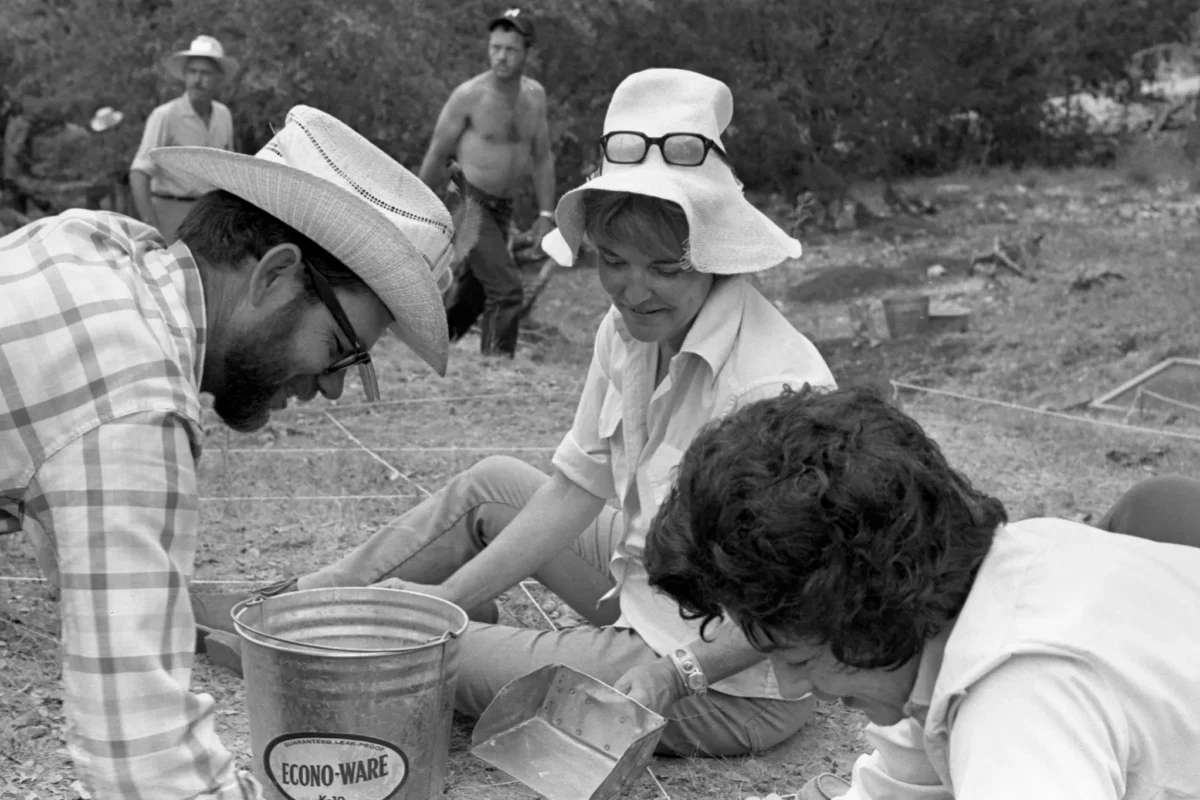
Currently, the group is processing the 1971–72 Texas Archaeology Society Field School collection. This collection formed the basis for a graduate dissertation by prolific architect Alan Skinner, who regularly attends the open labs to answer questions.
“There’s a real joy in seeing an archaeologist as accomplished as Skinner return after all these years,” said Boulanger. “He was in his 20s when this project started, and now it kind of makes the circle complete.”
While this collection may not exactly contain the Ark of the Covenant or the Holy Grail, it does provide a vital record for what life looked like 1,000–5,000 years ago. Excavated largely from rural Texas areas, these artifacts fill in missing pieces to complete a critical geographic puzzle.
“A collection like this allows us insight into other environments and ecological zones that we might not otherwise look at,” said Boulanger. “This one in particular contributes to a broader understanding of Native American life in Texas.”
Boulanger says the SMU team is on pace to have the collection catalogued in its entirety by the end of this year. Beginning after winter break, the team of volunteers will embark on its next undertaking — inventorying the Loyd Harper, Sr. Archeological Collection, which consists of artifacts from Texas, Oklahoma, and Louisiana.
“It’s important work,” said Boulanger. “If we really want to preserve the archeology of our area, we have to think about what is going to happen to all of this stuff in 40, 50, or 60 years into the future.”
Author