

As Captain James T. Kirk of the USS Enterprise said, “Space: the final frontier.”
Those scripted words were spoken in the opening sequence of the late 1960s television show Star Trek by a fictional character, but he wasn’t wrong. From the Wright brothers’ inaugural flight in 1903 to NASA’s first space flight in 1961, we have looked to the sky with wonder and ambition, in awe of the defiance of gravity and the intelligence of aeronautical engineers.
President Franklin D. Roosevelt declared August 19 National Aviation Day because it coincided with Orville Wright’s birthday. Advances in aviation are something most of us take for granted, as we rely on airplanes to propel us to destinations foreign and domestic.
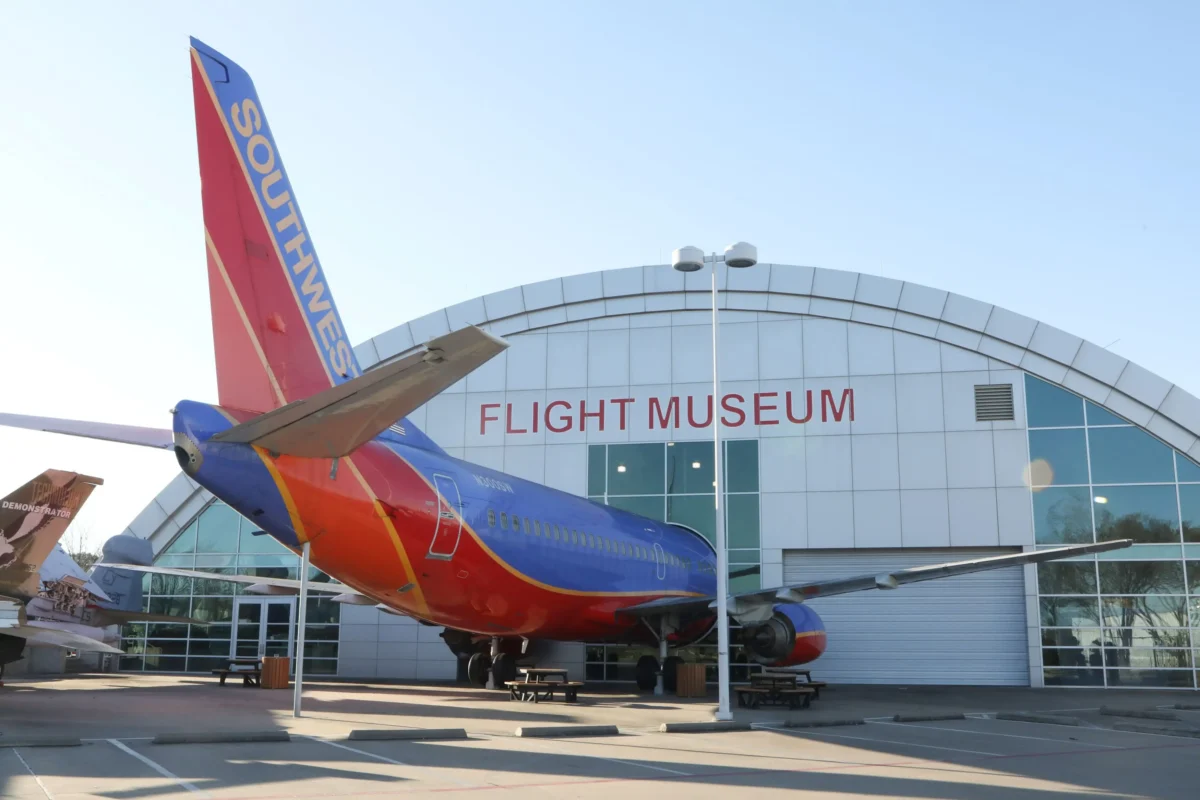
To take a step back in time and get a clearer understanding of the history of aviation, visit the Frontiers of Flight Museum in Dallas. I recently attended a preview for a new exhibit on the Hindenburg and was enthralled by the breadth and depth of experiential content in the museum, located just east of runway 13-L/31R at Love Field.
Since Abigail Erickson-Torres became President and CEO of the museum in 2023, it has taken off with additional funding, new exhibits, a focus on STEM camps, and activities for kids. Like all great museums, it also has an enhanced gift shop and a new coffee shop called Jetsetters.
“Frontiers of Flight is more than a museum,” Erickson-Torres said. “We are the hub for aerospace education and workforce solutions, connecting students, the public and industry to the rapidly growing aerospace workforce of North Texas.”
The museum’s permanent collection contains more than 35,000 historical artifacts pertaining to aerospace. It would take a while to see each of them, but entering the museum, with fighter jets and historical bi-planes aloft in the hanger-like setting, guests are immediately immersed in shrine to possibility and the evidence of will over gravity. You don’t need to see them all in one visit. Just take it in.
Expanding the museum takes vision and funding. Erickson-Torres plans to continue to enhance the user experience and upgrade the museum spaces by the end of July 2028. The museum’s neighbor, JSX, a Dallas-based air carrier, supports Frontiers of Flight Museum and promotes the role the museum plays in connecting community to the world of flight.
David Drabinsky, president of JSX and FOFM board member said. “JSX is committed to investing in the communities we serve which includes supporting the museum’s role in preserving aviation history while creating engaging educational experiences. It’s a natural partner for JSX.”
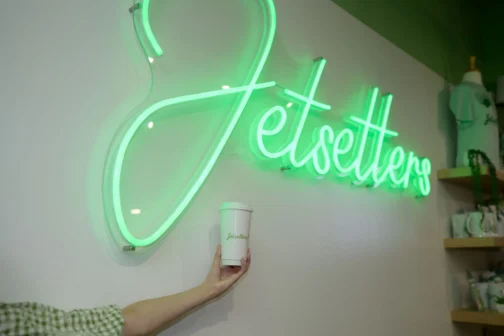
Jetsetters cafe is open to the public and doesn’t require a ticket purchase to enjoy elevated snacks.



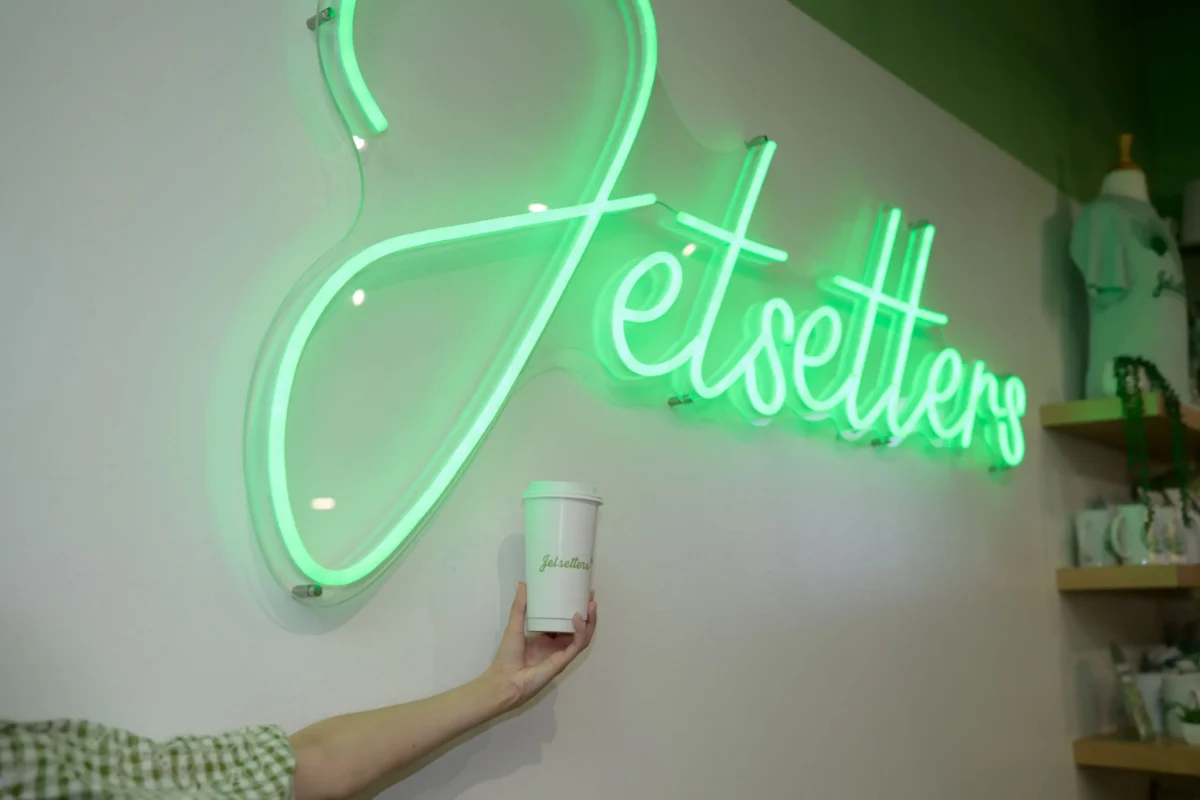
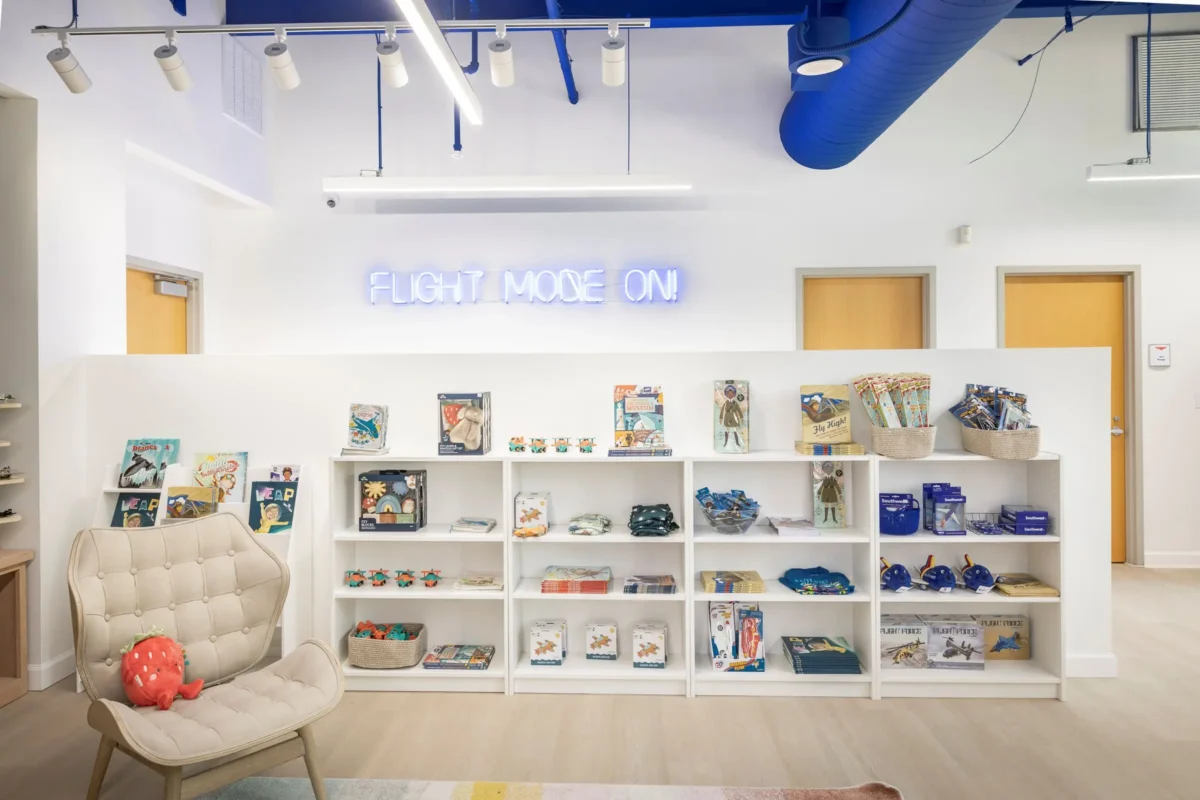
Erickson-Torres’ efforts extend further than the museum’s programming itself. Her team has improved the gift shop experience and opened Jetsetters café, which offers a well-curated selection of food and drinks. Cultivar Coffee Roasting, Sugar & Sage Bakery, and Taco Deli breakfast tacos grace the menu, along with some refreshing non-alcoholic beverages.
Speaking of food, the museum’s Hindenburg exhibit was riveting and included the menu and place settings from the dirigible’s fated final journey. Passengers feasted on delicacies such as Indian Swallow Nest Soup, a gelatinous soup made from bird saliva, and Carmen Salad, a sad looking cold dish made with rice, chopped vegetables, and poached chicken. That wasn’t my only takeaway from the text-heavy exhibit, but it was the most traumatic one.
Maybe you’ve attended a gala or fundraiser at the Frontiers of Flight Museum, maybe you’ve just driven past it and vowed to “someday” visit. If you haven’t been, or haven’t been recently, the museum is a valuable cultural and educational asset to North Texas. Celebrate National Aviation Day there or just escape the heat in a cool museum. Go for the airplanes, stay for a snack at Jetsetters.
Author
