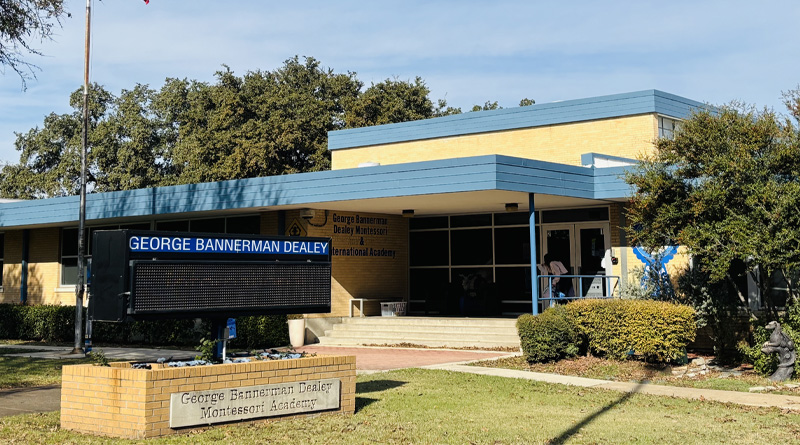
As the new semester begins, Preston Hollow schools within Dallas ISD are entering the season with confidence. The latest state accountability ratings show measurable academic gains across school campuses, giving families reason for optimism after years of pandemic disruptions, campus relocations, and district-wide change.
This year’s ratings highlight gains at three neighborhood schools: George Bannerman Dealey Montessori Academy, Walnut Hill International Leadership Academy, and W.T. White High School.
Under the state’s accountability framework, schools receive letter grades based on student achievement, academic growth, and “closing the gaps,” which measures how well campuses support historically underserved groups. STAAR test results and other data provide a view of what schools are doing well and where they can improve.
Education expert Robin Berkley, Ann Kimball Johnson Director of Education at the George W. Bush Institute, explained that accountability systems help families and educators understand school performance and guide improvement.
“State tests, like STARR, are based on state standards, which articulate what students should know and be able to do in each subject area for each grade,” said Berkley. “The results of these tests are broken down across student groups — including by race/ethnicity, socioeconomic status, gender, English-language learners, and special education students — and provide an apples-to-apples comparison of student performance by grade across school and district lines. Unlike report cards and teacher observations, assessments provide the only objective and comparable information about student performance.”
For a third consecutive year, the pre-K–8 campus of George Bannerman Dealey Montessori Academy earned an A rating. STAAR results show strong student performance in reading and math, reflecting the school’s personalized learning plans and high parent engagement. This year’s theme, “Where Dragons Thrive,” aligns students and teachers around clear goals, fostering both academic achievement and social-emotional growth.
Walnut Hill International Leadership Academy saw one of the area’s largest gains, rising from a 78 to a 90 and earning an A rating. STAAR data showed that targeted math interventions helped 42 students move from failing to approaching grade level. The school’s “closing the gaps” score improved from a D to a B, demonstrating progress in its student body.
At W.T. White High School, the campus earned its first B rating after three years of literacy-centered instruction and renewed student engagement. STAAR results in English and algebra showed steady growth, while extracurricular participation surged. Band membership quadrupled, with nearly 700 students now participating in athletics, and AP exam participation more than doubled. Pass rates rose from 20% to 38%, and scholarship awards for seniors jumped from $5 million to more than $20 million.
“These results give policymakers meaningful information to use in targeting resources to the campuses and students with the greatest need, determining when to intervene in underperforming schools and monitoring campus and district improvement efforts. They also provide an important signal to parents about how well their child performed against grade level expectations,” said Berkley.
Assessments are one of the most important — and often misunderstood — elements of education, explained the education expert. “In most cases, tests are administered by the state as well as by districts and schools. Assessments at each of these levels have distinct purposes, yield different information, and are part of a powerful, coordinated approach to improving student outcomes,” she said.
Berkley doesn’t disagree with the emphasis school leaders place on progress built day by day through work that makes every student feel supported, challenged, and seen. She emphasizes that school accountability systems provide crucial information for policymakers, parents, and educators about the performance of our public education system.
“Leaders should use this information to direct resources and support to schools struggling to educate all students and enforce consequences for campuses and districts that continue to fail students over time. Parents can use this information to make decisions about the best educational options for their child,” she said.
Author