
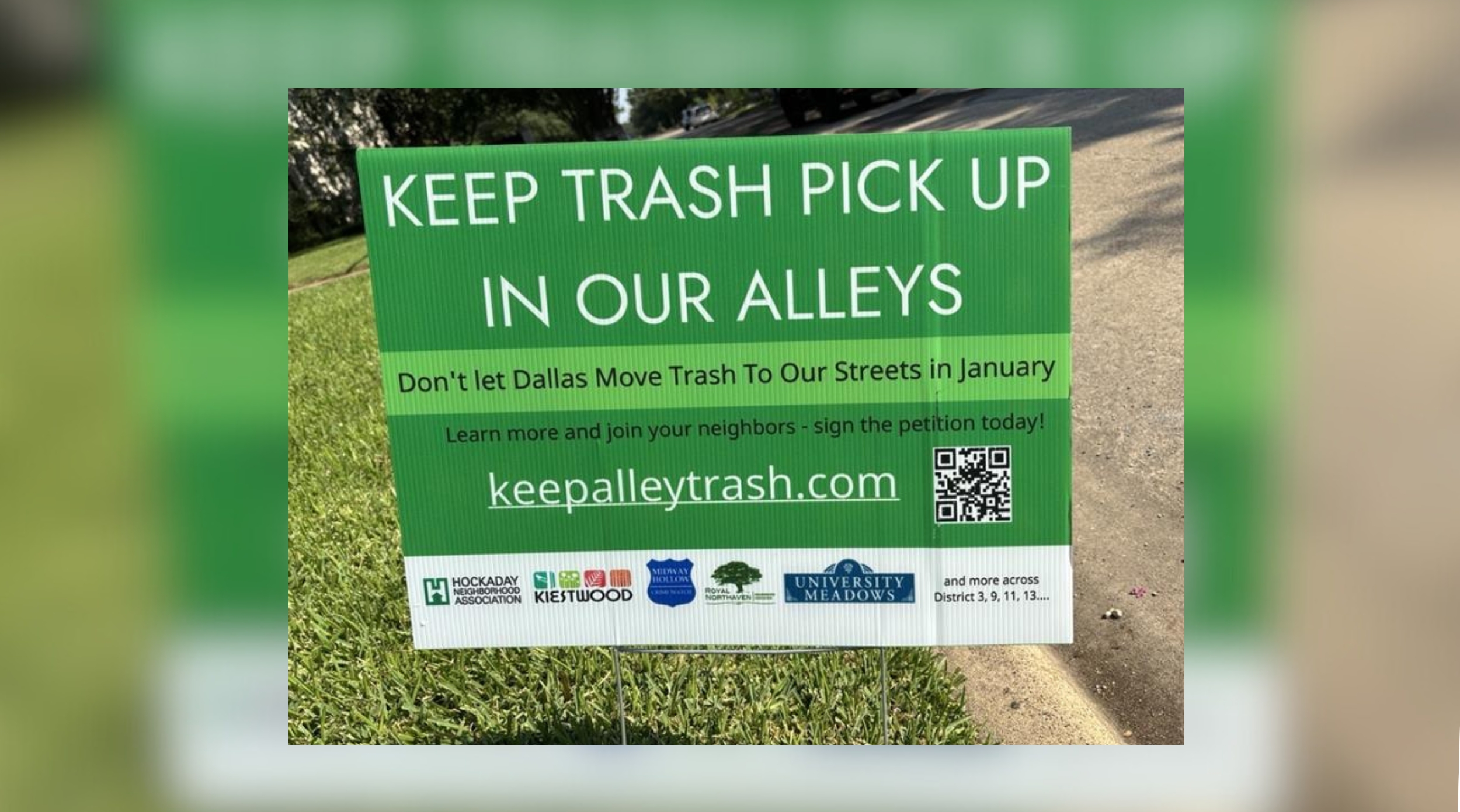
Since the City of Dallas announced last July its plan to eliminate alleyway garbage collection in certain neighborhoods beginning in January, public reaction from residents in the areas to be affected by the change has been overwhelmingly negative.
During a city council briefing, city officials cited multiple reasons for the transition, including safety concerns, the deteriorating condition of some alleys, increased wear on sanitation trucks, and escalating costs associated with maintaining alley service. Sanitation Services Director Clifton Gillespie also noted that approximately 60% of Dallas neighborhoods already rely on curbside pickup.
In a memorandum dated Sept. 5, City Manager Kimberly Bizor Tolbert confirmed that the City of Dallas plans to move forward with the long-planned transition from alley to curbside trash pickup for 26,000 households, citing, in further detail, the recent city analysis that found maintaining alley collection would require 300 additional workers, 100 new trucks, and an estimated monthly cost of $70–$81 per household — expenses not included in the proposed FY 2025-26 budget.
Opposition has grown more organized since the announcement. Grassroots efforts have gained traction, including a petition with over 9,600 signatures, the appearance of protest yard signs, and a dedicated opposition website.
During the open microphone segment of a Sept. 10 city council meeting, several residents vocalized concerns about the garbage service changes. Speakers expressed a variety of worries — ranging from reduced property values to logistical challenges for residents living on narrow or crowded streets, fears about pedestrian safety, the burden on seniors and those with disabilities, and damage to landscaping.
In response, in a memorandum to City Manager Tolbert, District 13 and District 9 Councilmembers Gay Donnell Willis and Paula Blackmon proposed “options for flexibility,” allowing residents to retain alley service if they are willing to pay a higher rate and if their block meets maintenance standards for alley conditions. Their plan would also offer a lower-cost option for those who switch to curbside pickup.
City Manager Tolbert reiterated the necessity of citywide changes to alley garbage collection to protect workers and ensure long-term sustainability, pointed to existing support programs such as Helping Hands and optional valet services for seniors and those with disabilities, and concluded with a pledge by The Sanitation Department for continued outreach and support as the transition rolls out.
As the January deadline approaches, the debate shows no signs of slowing.
Author