Visitors of the Greenhill School will likely notice colorful feathers strewn about campus from a bird that’s been a staple of the grounds since the 1960s.
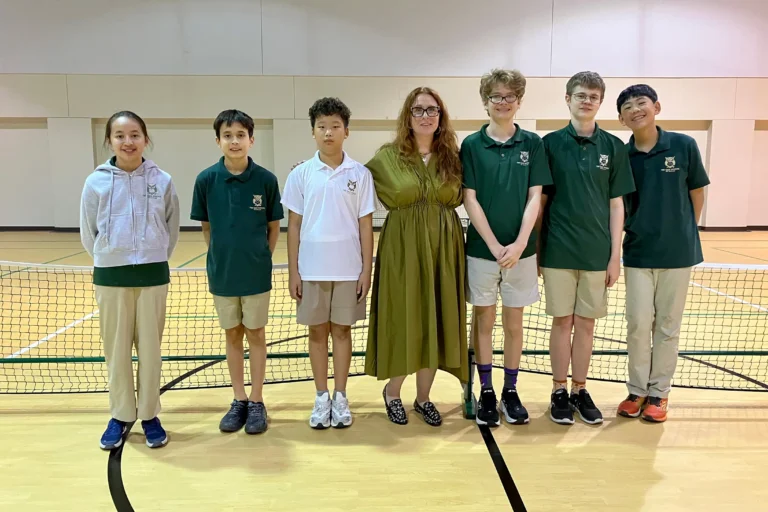
But when science teacher Gretchen Pollom first became a faculty member in 2018, it wasn’t the peacocks that caught her attention, but instead the quiet charm of native birds outside of her classroom. Pollum asked for a pair of binoculars so her students could study them more closely.
The middle school teacher, who grew up on Indiana farmland, was accustomed to looking at her outdoor surroundings, including the color of the soil. The naturalist wasn’t thrilled to find the discolored, pesticide-filled type so prevalent in North Texas residential neighborhoods and school campuses.
“I think we have to rethink the way we engage with our environment,” Pollom said. “We have to share that space and bear it in a way that doesn’t damage it so that other species can’t survive.”
She realized that planting more native species could help reduce erosion, improve soil quality, and provide critical habitats for pollinators — all while enhancing the educational experience for her students.
“I’m really passionate about the Blackland Prairie. The hard and dry soil in (the region) causes plants to need thick, deep roots to thrive,” Pollom explained, adding that Bermuda grass and winter rye — the types of grass planted on Greenhill’s campus — don’t take advantage of the soil.
Pollom was also eager to bring a pollinator garden to the school campus. After creating a series of outdoor learning spaces for students, Pollom quickly saw the potential for broader impact.
The mother of three (now adult) sons sought to protect her students from what Richard Louv described as “nature deficit disorder.”
“Not only can we learn about land and nature itself, but time in the gardens also helps cultivate deeper understandings about ourselves and our connectivity to both the land and each other,” she said.
Along with faculty from the English, history, science, and art departments, Pollom brought her mission to life with a vision rooted in sustainability and outdoor learning. After identifying more than 70 areas in need of ecological improvement, Pollom and her collaborators planted hundreds of native plants in various locations. Her idea blossomed into a campus-wide effort.
The Texas Conservation Alliance, a league growing native plants at the Dallas Zoo, matched Greenhill’s efforts, supplying two plants for every one planted, transforming the campus into a dynamic living lab with outdoor classrooms where students can explore science, sustainability, and their place within the natural world.
The North Texas Master Naturalist’s goal is to transform one to two acres of land back into Blackland Prairie, a goal that may soon be made possible. The Edward E. Ford Foundation has established a $100,000 matching grant for a comprehensive environmental science education program at Greenhill, including the construction of a greenhouse, Blackland Prairie ecosystem installation, and outdoor learning spaces for pre-K-12th grade.
“Not only are we restoring a large portion of Greenhill’s 75 acres to prairie, but the students are also propagating native plants to sell in hopes they’ll inspire others to use plants native to the region,” Pollom said.
Through her project, Pollom has sown more than just seeds — she’s planted a deeper awareness of the relationship to the environment and each other, helping students become not just learners, but stewards of the land.
“I want the students to be present wherever they are,” she said, “and then, through their personal, hands-on interactions with nature, cultivate an understanding and a pride in how they can prompt change in their corner of the world.”
“It’s all about connections,” she said. “Everything in an ecosystem is connected.”
Author