Traditional retirement planning treats your golden years like a math problem — calculate savings and maximize investments to ensure financial stability.
Even in these traditional models, more people are behind the curve than ahead of it. Only 35% of Americans felt on track for retirement in 2024, according to Federal Reserve data.
While money matters, this narrow focus misses the bigger picture of what it truly means to thrive in retirement.
We believe a much better approach is “retirement mapping” — a comprehensive process that recognizes retirement in a multifaceted manner that requires attention to your whole self, not just your wallet. This framework helps individuals identify planning gaps they might not have considered independently.
The Framework: Six Key Life Dimensions
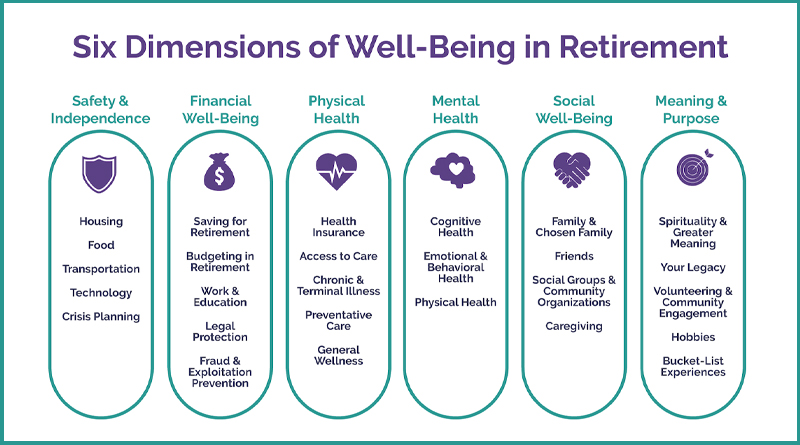
Unlike conventional retirement planning, retirement mapping examines six interconnected life dimensions:
- Safety & Independence
- Financial Well-Being
- Physical Health
- Mental Health
- Social Well-Being
- Meaning & Purpose
As you move through the different stages of adult life (such as pre-retirement, retirement, and end of life), aspects of each dimension come into prominence.
Let’s look at a practical example of the six dimensions with someone in the “retirement” phase of life (roughly ages 65 to 80+).
Safety and independence could include home modifications for aging in place, technology adoption to maintain autonomy, and transportation planning as driving abilities may change.
Financial well-being encompasses traditional retirement savings while also addressing benefit optimization, estate planning, and long-term care costs.
Physical health involves healthcare provider relationships, insurance coverage evaluation, and preventive health measures including exercise, nutrition, and sleep hygiene.
Mental health covers understanding normal cognitive changes versus concerning symptoms that could indicate dementia, stress management techniques, and access to mental health resources.
Social well-being addresses caregiving needs for oneself or others, relationship maintenance, community engagement, and strategies for combating isolation as social circles naturally shift.
Meaning and purpose involve post-career identity, volunteer opportunities, creative pursuits, and addressing life goals that may have been deferred.
This comprehensive approach may involve difficult conversations and hard decisions, but it positions you to navigate aging with confidence and intentionality.
Rather than simply hoping for the best, retirement mapping empowers you to actively shape a fulfilling future across all dimensions of your life.
It identifies factors that could have a great impact on this phase of life that you likely never would have thought of on your own. It’s so satisfying to see how people feel like a weight’s been lifted off their shoulders as they work through the process.
Andrea Marshall and Haiden Maples serve as financial specialists at The Senior Source’s Elder Financial Safety Center, created in 2014 to provide older adults and their loved ones with professional guidance to increase financial well-being and security. The Senior Source assists approximately 25,000 older adults and their families each year. Learn more at theseniorsource.org.
Authors

Andrea Marshall
View Profile