Olympic gold medalist authors memoir to support lifesaving mission
By Lisa Petty
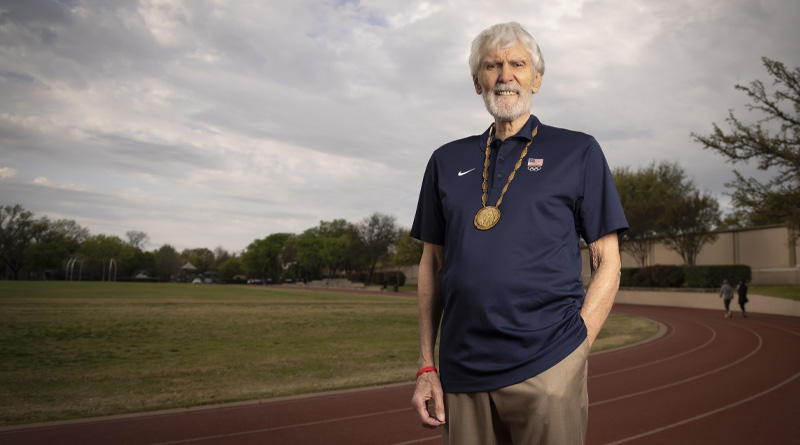
The 1960 Summer Olympics marked many historic moments. Set against the breathtaking backdrop of Rome, it was the first Olympiad to be broadcast via network television in the United States.
Families across the country cheered as American athletes brought home 71 medals, including a 19-year-old sprinter from Texas who would become the youngest gold medalist on the record-setting U.S. track and field team.
But luckily for us, Earl Young was just getting started.
“This is the best part of my life,” said Young of his current era. “I wouldn’t trade this for anything.”
Neighborhood Spotlight
Park Cities
Where the Park Cities Stay Connected.
Following up Olympic gold and the cover of Sports Illustrated with a global finance career, the Park Cities resident served as an officer and advisor for Fortune 500 companies and investment banking firms.
Then, at 71, a diagnosis of Acute Myeloid Leukemia (AML), a type of blood cancer, nearly stopped the runner in his tracks. Doctors gave Young just three months to live, unless a matching blood stem cell donor was found. With that, the athlete trained his deeply ingrained determination on an entirely new goal.
“I knew nothing about what I was going into,” Young recalled. “But, in Offenburg, Germany, two weeks before my diagnosis, a woman named Christine Waag had registered to be a donor. There were 22 million donors on file at that time, and Christine was the only match out of those 22 million that would fit my need.”
Young’s life was saved with treatment including a stem cell match and transfusion – just as the startling realization that only 60% of blood cancer patients ever find a matching donor informed his next chapter.
“Four in 10 people die while their match is out there, unaware that someone needs their help,” he said. “How many times do you get a chance to save a life?”
That question is at the heart of the mission of Earl Young’s Team, founded by Young in 2015 to raise awareness surrounding blood cancer and the importance of donor registration.
Through at-home swab kits, donor drives, and fundraisers, the nonprofit organization has been able to register more than 39,000 new potential donors for the nearly 20,000 patients in need across the country each year.
“It’s a known science. It works,” Young emphasized. “And for 70 different blood cancers, it’s the only thing that will save a life.”
Fast forward to 2025, and there was still another chapter to come – several chapters, actually.
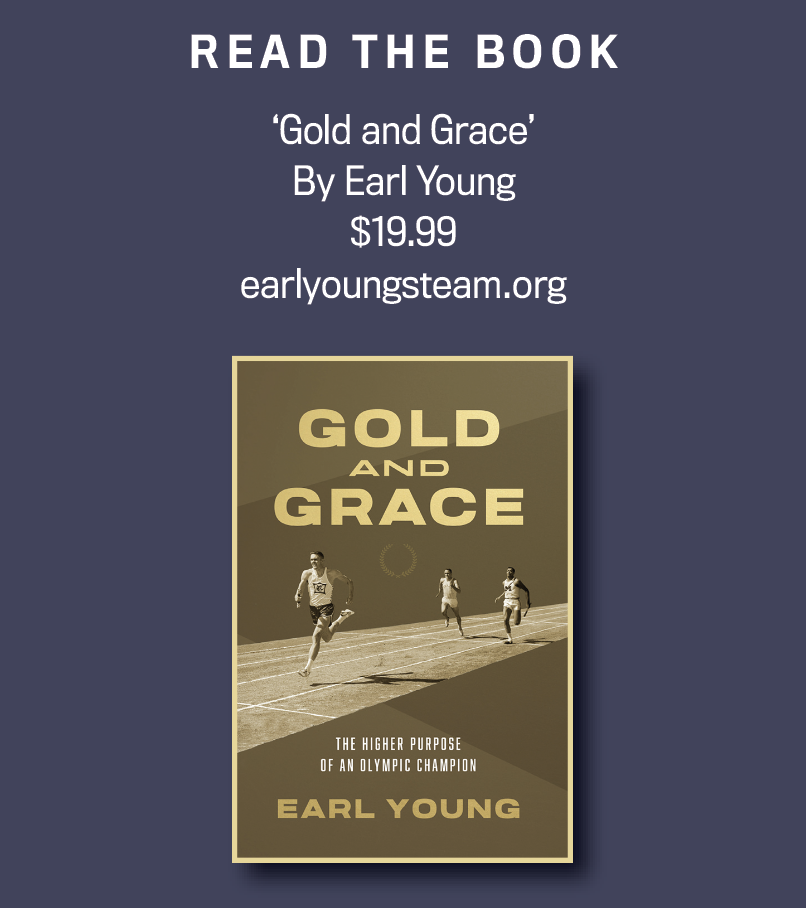
Gold and Grace: The Higher Purpose of an Olympic Champion in which Young chronicles his remarkable life, debuted in the fall.
Proceeds benefit his efforts to fight blood cancers, and the memoir also includes inspiring stories of other blood stem cell donors and recipients.
In the words of this world class athlete, successful businessman, cancer survivor, and activist, “Helping a team win an Olympic gold medal is impressive, but assisting a team in saving lives is even more rewarding.”